

Liaquat Baloch slams PPP, PML-N over 'hybrid politics'
JI leader Liaquat Baloch said in Hyderabad that the PML-N and PPP depend on the hybrid system for political survival. He also criticised PPP's rule in Sindh and described the country's political and economic situation as alarming.

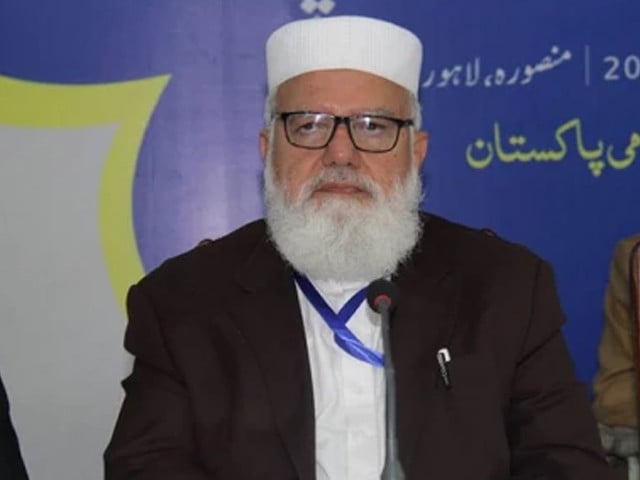
HYDERABAD: Jamaat-e-Islami leader Liaquat Baloch has alleged that the Pakistan Muslim League-Nawaz and the Pakistan Peoples Party draw their political strength from what he described as a hybrid system, accusing both parties of trying to protect their interests by misleading both the establishment and the public.
Addressing a gathering of party workers and residents during a JI membership drive camp in Hyderabad, Baloch said the PPP, PML-N and Pakistan Tehreek-e-Insaf had jointly backed constitutional amendments related to military courts and the extension in the army chief's tenure. He said those same parties were now speaking about democracy and the supremacy of the Constitution.
Baloch said the opposition's strong rhetoric, coupled with its inability to achieve any tangible political breakthrough, had only strengthened what he called a non-representative government and the establishment. He accused the PML-N and PPP of engaging in what he termed fake political confrontation while continuing to provide unconstitutional and undemocratic support from the same platform.
"Their lifeline is the hybrid system. Both are fooling the establishment and the public at the same time to secure their interests," he told the gathering.
Criticising the PPP's governance in Sindh, Baloch said the party had devastated the province. He alleged that feudal culture had kept people subjugated and that daku raj had made conditions difficult for Sindh's residents. He also described the existing local government structure as powerless and said it had failed to provide basic services to the public.
Referring to the broader political situation, Baloch said Pakistan's politics was stuck in a deadlock marked by accusations rather than dialogue, a situation he said had allowed the establishment to exercise unchecked influence over the country. He described the political and economic conditions as highly alarming and called for an end to what he called a system based on oppression and force.
Comments
No comments yet. Be the first to join the discussion!


