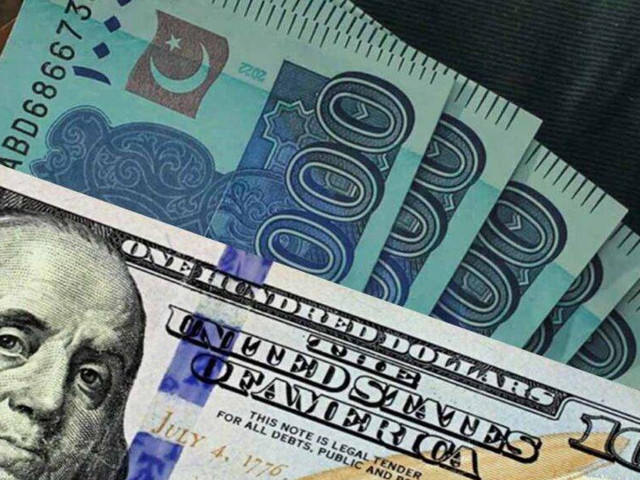
Govt sets Rs290 per dollar benchmark for FY27 budget
The federal government has set Rs290 per dollar as the benchmark exchange rate for FY2026-27 budget estimates and external payments. The rate will be used for foreign loans, debt servicing, defence imports and development financing.

ISLAMABAD: The federal government has fixed an exchange rate of Rs290 to the dollar for preparing budget estimates for the next fiscal year, setting a benchmark for foreign loan repayments, grants, development financing and other external obligations in FY2026-27.
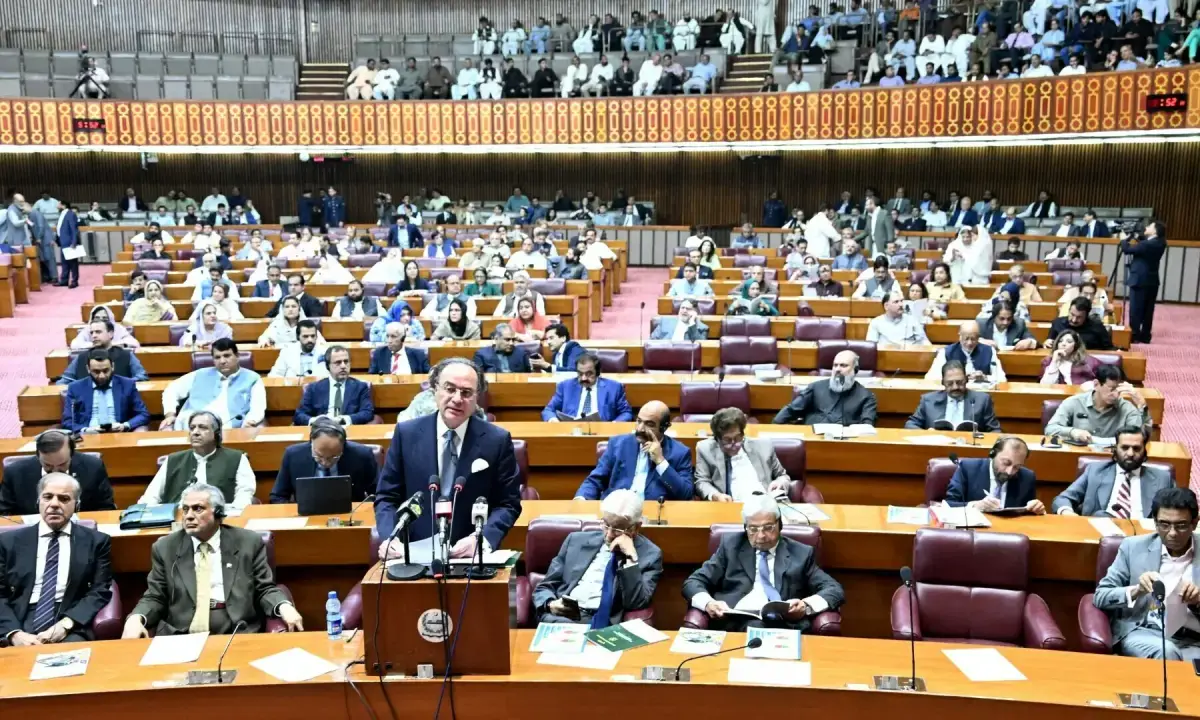
An office memorandum issued by the finance ministry to ministries and divisions states the rate will be used for budget allocations for the coming fiscal year. The government has also announced June 10 for the budget speech, subject to final approval by Prime Minister Shehbaz Sharif.
The Rs290 benchmark reflects a nominal depreciation of Rs10, or 3.5%, compared to the current fiscal year’s assumption. However, this does not align with recent currency market trends, as the rupee has strengthened gradually over the past two years and has lately been gaining about one paisa a day against the US currency. On Thursday, the inter-bank rate stood at Rs278.42 to a dollar, showing a three-paisa gain for the rupee.
The same exchange rate will be applied in calculating the foreign component of the defence budget, foreign debt servicing, allocations for Pakistan’s missions abroad and the Public Sector Development Programme (PSDP). The International Monetary Fund (IMF) has projected the defence budget at Rs2.66 trillion, though government sources indicated that a higher allocation remains possible due to hostilities at international borders.
Foreign financing and development spending
For FY2026-27, the federal and provincial governments together plan to secure $3.2 billion, or Rs927 billion, in foreign loans for project financing. This amount represents 22% of the combined national development budget of Rs4.3 trillion, underlining continued dependence on external financing.
Of this total, the federal government has indicated Rs267 billion in foreign project loans, while the four provinces have projected Rs660 billion. The current year’s budget had also been built around an exchange rate assumption of Rs290 to the dollar, although the rupee remained broadly stable during the year. For revised estimates of the outgoing fiscal year, the government has decided to use Rs280 to the dollar.
External obligations and IMF assessment
The IMF has estimated Pakistan’s gross external financing needs at $21.2 billion for the next fiscal year and $30 billion for the following year. Prime Minister Shehbaz Sharif held a meeting this week to review whether these financing needs had been properly incorporated and whether the government would be in a comfortable position to arrange $30 billion in FY2027-28.
The finance ministry assured the prime minister’s office that the country’s external financing requirements were fully covered and that the $30 billion figure for FY2027-28 was an IMF projection. For FY2026-27, the government has projected the current account deficit at around 0.7% of GDP, or $3.6 billion.
Exporters recently urged the prime minister to allow greater liberalisation of the rupee. Interest payments on external debt are projected at roughly Rs1.1 trillion, or nearly $4 billion, in the next fiscal year, while overall debt servicing may reach about Rs7.8 trillion.
Pakistan’s external debt remained largely manageable during the current fiscal year after the State Bank of Pakistan (SBP) bought dollars from the local market. SBP Governor Jameel Ahmad has said the central bank has purchased $27 billion since 2023.
In its recent staff-level report, the IMF said exchange rate flexibility should remain Pakistan’s main shock absorber, especially as the country continues rebuilding foreign exchange reserves. The lender also called for efforts to deepen the foreign exchange market through carefully sequenced medium-term liberalisation.
The IMF said the SBP’s reserve-building efforts had helped strengthen external buffers, but warned that reserve cover remained below standard adequacy measures and was not sufficient to back any particular exchange rate. "While the SBP's proactive approach to reserve accumulation has helped increase foreign exchange buffers, reserve cover remains too low by standard reserve metrics, and certainly inadequate to support any specific exchange rate."
The IMF said that with the economy facing its largest external shock since 2022-23, exchange rate flexibility should serve as the first line of defence if pressures emerge, allowing the inter-bank market to balance supply and demand efficiently. There is also a view that if the central bank stops purchasing dollars from the market, the rupee could strengthen further to around Rs260 against the dollar.
Comments
No comments yet. Be the first to join the discussion!