

Pakistani pine nuts seen gaining ground in China’s premium nut market
Pakistani pine nut exports to China nearly doubled between 2023 and 2025, according to Chinese customs data. Industry participants say better processing, packaging and logistics could help expand Pakistan’s share in the premium market.

ISLAMABAD: Pakistani pine nuts are emerging as a stronger contender in China’s growing market for premium nuts, with demand rising as Chinese consumers increasingly seek high-quality and nutritious imported food products.
The nuts, harvested in the mountainous areas of northern Pakistan, are known for their flavour, nutritional content and natural cultivation. Despite that, they still hold only a limited share of China’s expanding premium nut segment, according to a report originally published by China Economic Net and carried by Express Tribune.
Production concentrated in key regions
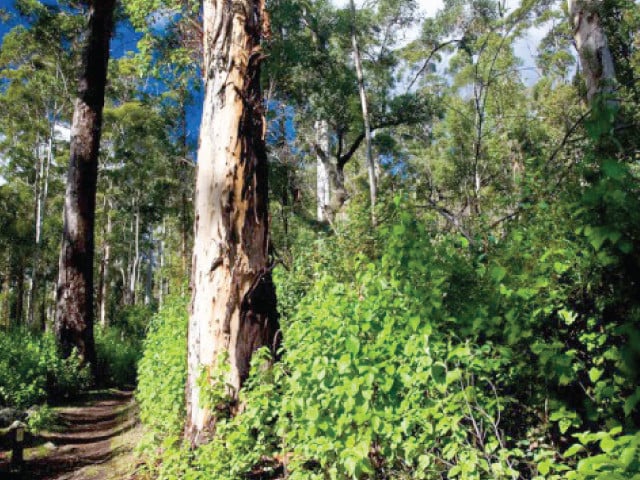
Pakistan’s chilgoza forests are mainly located in North and South Waziristan, as well as parts of Balochistan, Khyber-Pakhtunkhwa and Gilgit-Baltistan. Amjad Zarin, an associate professor at Jilin International Studies University, said North and South Waziristan account for roughly 80-85% of the country’s total pine nut production.
He told China Economic Net that North Waziristan produces about 1,700-2,000 metric tons a year, while South Waziristan contributes another 800-900 metric tons. Overall annual production in Pakistan usually falls between 2,100 and 2,900 metric tons, with output rising in years of favourable weather.
China now the leading destination
Exports to China have increased sharply in recent years. Data from the General Administration of Customs of the People’s Republic of China showed that Pakistan’s pine nut exports to China nearly doubled between 2023 and 2025, climbing from 579.8 tons to 1,147 tons.
Export earnings rose from $8.2 million in 2023 to $18.8 million in 2024, before slipping slightly to $17.9 million in 2025. According to traders, around 80-90% of Pakistan’s pine nut exports are now shipped to the Chinese market.
Abdul Mateen, chief executive of AM Enterprises, told China Economic Net that his company has been exporting Pakistani pine nuts to China for the past 12 years. He said Chinese buyers favour Pakistani chilgoza because of its thin shell, crisp texture and mild taste.
Scope for deeper cooperation
Mateen, who has worked closely with China since 2014, said there is considerable room for Pakistan and China to expand cooperation in agricultural processing and value-added exports. He identified modern cleaning and sorting systems, dehydration technology, roasting and deep-processing facilities, advanced packaging and cold-chain logistics as major areas for collaboration.
Such cooperation could improve product quality, prolong shelf life, reduce post-harvest losses and help Pakistani exporters develop higher-end retail products for international markets. Stronger e-commerce links could also broaden Pakistani pine nuts’ reach among Chinese consumers and support bilateral agricultural trade.
Prices rise as demand grows
Local prices in Pakistan have climbed in recent years amid strong international demand. Traders said pine nuts in Islamabad were selling at Rs4,500 to Rs8,000 per kilogram in 2025-26, while export-grade product could fetch as much as Rs12,000 per kilogram.
Mateen said the average price in China stood at RMB 130 per kilogram in 2025. Zarin said prices in Wana Bazaar were around Rs2,200-2,500 per kilogram in 2025 and rose to nearly Rs2,700 in winter because of seasonal demand, adding that prices had remained almost unchanged so far this year.
Industry experts described China as the most promising export market for Pakistani pine nuts because of its large consumer base and growing appetite for premium imported foods. The sector, however, continues to face constraints including limited processing capacity, weak packaging and inconsistent quality standards. Better processing, branding, certification and supply chain management, along with stronger ties with Chinese investors, food-processing firms and e-commerce platforms, could help Pakistan compete more effectively in China’s premium nut market.
Comments
No comments yet. Be the first to join the discussion!


