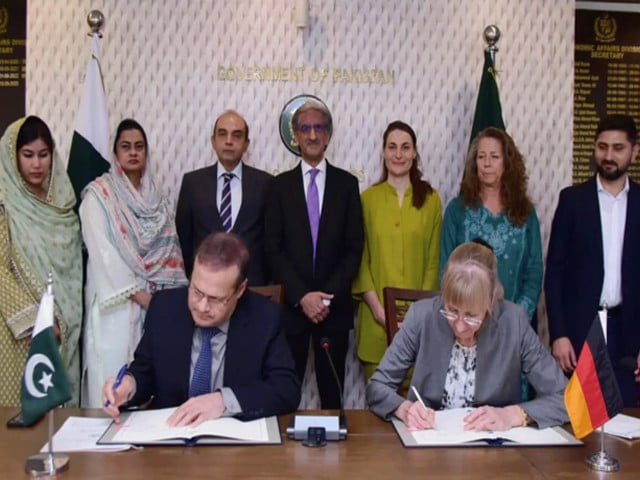
Germany, Pakistan share opposition to proxy warfare: ambassador
German Ambassador Ina Lepel said Germany and Pakistan are aligned in opposing proxy warfare and support keeping global trade routes open. She also highlighted prospects for cooperation in education, technology, defence and economic development.

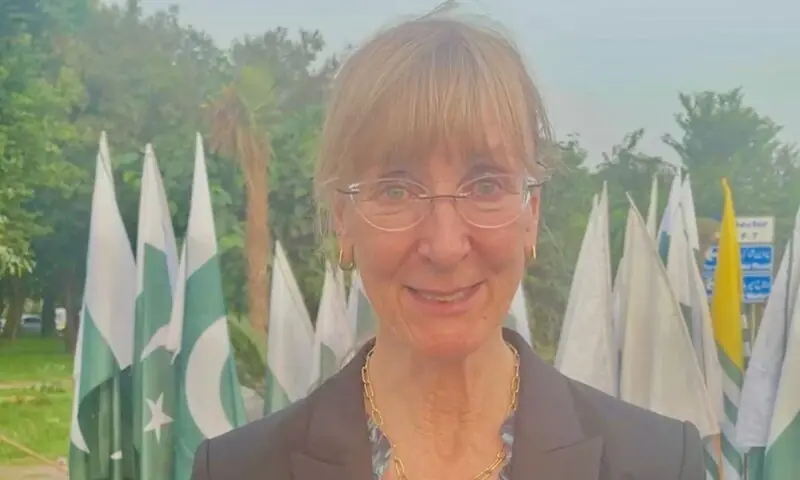
ISLAMABAD: German Ambassador Ina Lepel said Germany and Pakistan hold similar views on global peace and are both firmly opposed to proxy warfare, while also calling for key land and sea trade routes to remain open to prevent wider economic disruption.
Speaking at an event in Islamabad, the ambassador said all land and maritime corridors, including the Strait of Hormuz, should remain peacefully accessible to avoid serious consequences for the global economy at micro, macro and mega levels. She said Germany and Pakistan could work together to reduce global tensions through hybrid diplomatic approaches that protect sovereign autonomy and support peace.
Ms Lepel also praised Pakistan’s mediation role in regional peace efforts and said it had helped avert a renewed war between Iran and the United States. At the same time, she said Germany’s concerns regarding Iran were justified, adding that Berlin does not support a nuclear Iran and believes Tehran must end its policy of backing proxies in the region.
Economic ties and workforce cooperation
The ambassador said Germany wanted to exchange ideas with Pakistan on development and prosperity in the context of global economic corridors. She noted that more than 10,000 Pakistani students are studying in Germany and stressed the importance of learning the German language for those intending to join the workforce there.
She said German businesses operating in Pakistan are largely part of value-added chains, but expressed regret that local firms and investors have shown limited interest in vocational training, which she said has left the broader ecosystem less responsive. According to the ambassador, integrated value-chain systems are a priority for Germany.
She also said Pakistan has already played a role in the Gulf Aviation Consortiums through the input of large Airbus fleets in the aviation sector. In addition, she said Germany’s ICT framework is among the largest globally and that Berlin intends to offer outsourced ICT entrepreneurship and self-employment opportunities to young people in Pakistan.
Foreign policy, defence and global outlook
Ms Lepel said European integration, the trans-Atlantic relationship, investment in defence and multilateralism are the main pillars of German foreign policy. She said there was potential to increase defence cooperation with Pakistan, but added that concerns remained over intellectual property rights and where any provided technology might ultimately be used.
Recalling earlier cooperation, she said Germany had procured uniforms from Pakistan about a decade ago, which could open the door to future engagement. Discussing broader geopolitical shifts, she said the changing global order had become more visible in the backdrop of the US-Israel-Iran war and that ongoing upheavals were shaping a new world order.
She said multilateralism remains Europe’s preferred course, with many member states aligning more closely on defence, foreign policy, economic matters and climate concerns. On climate change, she said the issue needed to be addressed seriously, including through distinguishing between disruptive and non-disruptive outcomes.
The ambassador said Germany’s new government is focused on Europe’s security, freedom and prosperity. Referring to Russia’s invasion of Ukraine, she said the war had changed the balance of realpolitik and carried severe consequences for Europe’s collective security. On Nato, she said Russia’s expansionist policy had shifted the strategic landscape and that it was effectively at war with Europe. She added that Germany was carrying 2pc of Nato’s defence budget burden.
Replying to a question on Russian gas, Ms Lepel said Germany’s dependence had declined as it sought alternative options, while also stressing the need to move away from fossil fuels. She further said Germany plans to reduce human personnel by 8pc in order to improve efficiency through artificial intelligence, and added that European states are working together to cut bureaucratic red tape.
On China, she said Germany and Europe see Beijing as a competitor, while also recognising space for wider multilateral cooperation.
Speaking on technology partnerships, she said: "We are open to partnerships in technology wherever possible with emerging economies."
Comments
No comments yet. Be the first to join the discussion!