

Inflation squeezes salaried middle class
A Dawn report says rising prices are hitting households across Pakistan, with salaried middle-class families facing a growing support gap. Charitable networks continue to cushion some of the burden on the poorest, but survey data shows wages are not keeping pace with living costs.

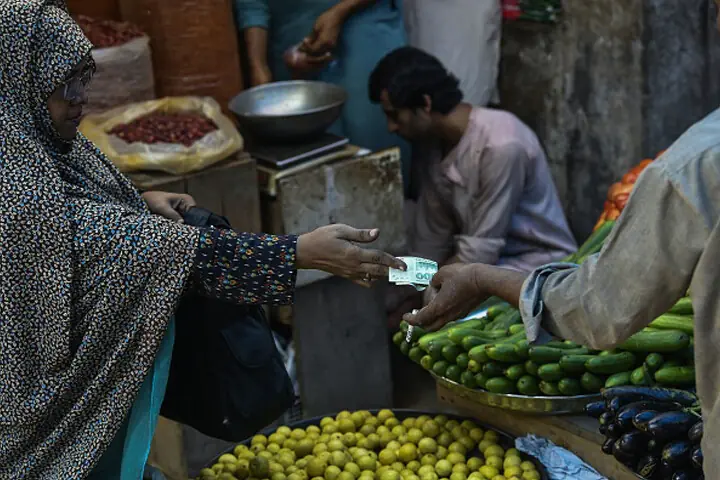
KARACHI: Rising living costs are placing heavy pressure on households across Pakistan, with the strain appearing especially acute for salaried middle-income families that are often outside the reach of traditional charitable support, according to a report published by Dawn.
how low-income households are also contending with steep increases in basic expenses. It cited the case of Saima, a domestic worker in Karachi’s Hijrat Colony who said the price of a 1kg gas cylinder had climbed from Rs280 to Rs450. She also said a gallon of salty water used for cleaning now costs Rs70, up from Rs20, while a gallon of drinking water has risen to Rs120 from Rs50. Even small household purchases have become harder to manage as snack prices have increased, she said.
Despite the burden on poor households, Pakistan’s culture of giving and informal support networks continue to provide some relief in urban areas. Citing the Pakistan Centre for Philanthropy’s Giving in Pakistan report 2025, around 73 per cent of Pakistanis donated money for different social causes in 2024. Pakistan also receives about $40 billion in annual remittances, while nearly $1bn may be circulating informally among lower-income households through zakat alone, according to Syed Hasan Ali, country director of the i-Care Foundation.
Charities report resilience and rising hardship
Faisal Edhi, chairman of the Edhi Foundation, said the poorest segment of society often remains without water, gas or electricity for 15 to 18 hours a day. Although Ramazan donations to the foundation fell by 20pc, its services have continued without major disruption.
The Layton Rahmatulla Benevolent Trust, which treats around three million patients each year through 63 clinics, reported a similar trend in donor support. However, its honorary chairman Najmus Saquib Hameed said affordability of travel remains a major obstacle for patients referred to hospitals for procedures.
He said only one in three patients is willing to travel for treatment, and attributed this mainly to transport costs. When travel assistance is provided, nearly 80pc of patients agree to go, he said.
According to Dr Nosheen Mahmood, manager research at the Pakistan Centre for Philanthropy, well-structured charities have remained relatively stable with support from the diaspora, while smaller charitable organisations have faced greater difficulty because their operating costs have risen.
Safed Posh families under pressure
The sharper blind spot may be the Safed Posh, or salaried lower-middle and middle-income households, which earn too much to qualify for sadqa or zakat but too little to absorb prolonged inflation.
Aquil Halai, a trustee of the Ahsaas Trust, said this group is facing some of the most severe pressure. His organisation supports families of single women with children under 18. He said that in large cities, many people still help household staff, but families dependent on a single breadwinner earning Rs150,000 to Rs200,000 are finding it increasingly difficult to cover school fees, utility bills, rent and transport.
Attributing the change to weaker purchasing power, Halai also said customers in his textile business who previously bought an average of four garments per bill are now buying 2.7. He added that seven to eight workers at his factory had recently borrowed money for household expenses for the first time.
Majyd Aziz, president of the Employers Federation of Pakistan, pointed to a similar pattern, saying requests for salary advances from white-collar employees had increased sharply, especially among those who do not qualify for charitable aid.
Survey points to widening cost gap
The report also cited annual pre-budget surveys conducted since 2020 among Dawn’s urban salaried readership to assess financial conditions. In a recent survey of 300 respondents, 55.6pc said they could not raise salary concerns for fear of losing their jobs. Only one in 10 respondents said pay increases were explicitly tied to inflation, while 15.5pc said they had received no annual increment.
Utility expenses have also increased significantly over the period covered by the surveys. In 2020, around 15pc of respondents said they spent more than Rs30,000 a month on electricity, gas and water. By 2025, that proportion had crossed 40pc. For middle-income households, utility bills now account for about a quarter to a third of take-home income.
Food costs have followed a similar trajectory. In 2020, most respondents reported monthly grocery spending of Rs20,000 to Rs30,000. By 2025, more than half said their grocery bill had exceeded Rs50,000.
Transport-related job benefits have become increasingly uncommon. Only two out of 284 survey respondents said they received fuel or car allowances. It also cited estimates from mobility company BusCaro, which said app-based fares for rickshaw, car and bike rides have risen by roughly 40pc since late February.
Inflation linked to fuel and broader cost increases is affecting households across income groups. Philanthropy is still helping cushion some of the impact for the poorest, but that the room for salaried middle-class families to absorb higher expenses is narrowing rapidly.
Comments
No comments yet. Be the first to join the discussion!
