

SC says khula cannot be granted without wife’s consent
The Supreme Court has ruled that khula should not ordinarily be granted without a wife’s consent when she has sought dissolution on grounds of cruelty and financial rights are at stake. The case has been sent back to the family court for the wife’s clear election.

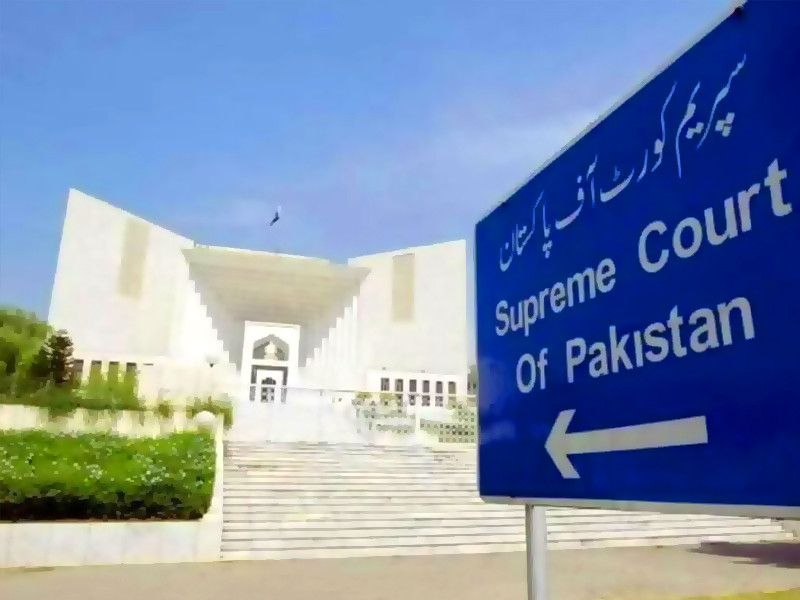
ISLAMABAD: The Supreme Court has ruled that where a wife seeks dissolution of marriage on the ground of cruelty, a decree of khula should not ordinarily be issued without her consent or a clear choice on her part, particularly when financial rights are involved.
The ruling came in a 12-page judgment authored by Justice Shahid Bilal in a case heard by a three-member bench headed by Chief Justice of Pakistan Yahya Afridi. The case arose from a family dispute in which the wife had approached a family court for dissolution of marriage on the basis of cruelty, while also seeking recovery of 30 tolas of gold as dower or its market value, along with maintenance from the date of neglect until the suit’s decision. "We hold that khula should not ordinarily be granted without the wife's consent or clear election where she has sued on cruelty and valuable financial rights are implicated," the court said.
The court said that if cruelty is not established but the marriage has evidently broken down, the proper course is to give the wife an opportunity to decide whether she wants to continue pursuing her cruelty claim or instead opt for dissolution through khula. Courts should not force continuation of a marital relationship that has effectively ceased to exist.
Cruelty in matrimonial law
The judgment said cruelty in matrimonial matters is not limited to physical violence. The concept also covers sustained humiliation, coercive control, emotional abuse, deprivation, indignity, and conduct that makes cohabitation unsafe or unbearable. Mental cruelty has also been recognised in law to include emotional torment, deliberate neglect, and conduct causing profound anguish to a spouse.
The court further clarified that allegations of cruelty may take on different legal meanings depending on the forum in which they are raised. "We may further clarify that allegations of cruelty arising within a domestic relationship may assume a distinct legal character depending upon the forum in which they are asserted," it stated.
According to the judgment, when such allegations are brought before a family court under the Dissolution of Muslim Marriages Act, 1939, or related matrimonial jurisdiction, cruelty is treated as a civil matrimonial wrong for the purpose of deciding marital status and related civil rights. In such cases, the applicable standard is the preponderance of probabilities.
By contrast, the court said that where the same or similar acts are prosecuted under criminal law, including domestic violence laws or other penal statutes, they amount to criminal wrongdoing and must be proved beyond reasonable doubt. The judgment stressed that the purposes of the two jurisdictions are different and that their evidentiary standards should not be mixed. Family courts must avoid importing criminal-law standards into civil matrimonial cases, as doing so could undermine relief intended to protect parties from oppressive domestic circumstances.
Findings in the case
The judgment recorded that the marriage was solemnised on September 19, 2016, and that the suit for dissolution was filed on October 8, 2016, meaning the matrimonial relationship lasted only a few days before litigation began.
"We have no cavil with the proposition that acts constituting cruelty may, depending upon their nature and gravity, occur even within a short span of cohabitation, and no inflexible rule can be laid down that cruelty must necessarily be preceded by prolonged matrimonial life. Each case must turn upon its own facts and evidence," the court observed.
After examining the record, the court held that the petitioner had failed to prove cruelty through material sufficient to meet the standard applicable in matrimonial proceedings. It also found that the concurrent findings of the lower courts did not suffer from misreading or non-reading of evidence that would justify interference.
At the same time, the court said the record showed that the marriage had effectively collapsed almost at the outset, with no meaningful cohabitation after the proceedings began and the petitioner consistently unwilling to resume married life.
"We find no sufficient ground to disturb the concurrent findings of the courts below insofar as the petitioner's allegations of cruelty have remained unproved. We are nevertheless of the considered opinion that the decree of khula ought not to have been granted without first affording the petitioner a conscious, informed, and unequivocal election, particularly when valuable financial rights were directly involved," the judgment said.
The Supreme Court therefore set aside the impugned judgments to the extent of the mode of dissolution and the resulting financial adjustment, and remanded the matter to the relevant family court. It directed the family court to record the petitioner’s statement and determine whether she chooses dissolution through khula on lawful terms or wishes to continue with her cruelty claim. The court ordered that a fresh decree be issued strictly in accordance with law on the basis of her choice, and directed that the exercise be completed expeditiously, preferably within 30 days of receipt of the certified copy of the judgment.
Comments
No comments yet. Be the first to join the discussion!


