Report highlights oversight gaps at rehabilitation centres
A report released under the EU-funded Huqooq-e-Pakistan II project has flagged gaps in oversight, regulation and accountability at selected rehabilitation centres. The study was undertaken by UNDP and NCHR and draws on patient testimonies and legal analysis.

ISLAMABAD: A report produced under the European Union-funded Huqooq-e-Pakistan II project has identified shortcomings in oversight, regulation and accountability at selected rehabilitation centres, based on testimonies from former and current patients as well as a review of institutional and legal arrangements.
Titled Caged in Care: Investigating Human Rights Abuse in Rehabilitation Centres, the report points to repeated problems in monitoring and enforcement. It says there are gaps between licensing frameworks and how they are implemented in practice, while also raising concerns about restricted access to complaint mechanisms and legal protections for people admitted to such facilities.
The investigative report was undertaken by the United Nations Development Programme (UNDP) and the National Commission for Human Rights (NCHR). Details shared at its launch, the study examined both personal testimonies and the broader legal and institutional framework governing rehabilitation centres.
Launch brings together officials and stakeholders
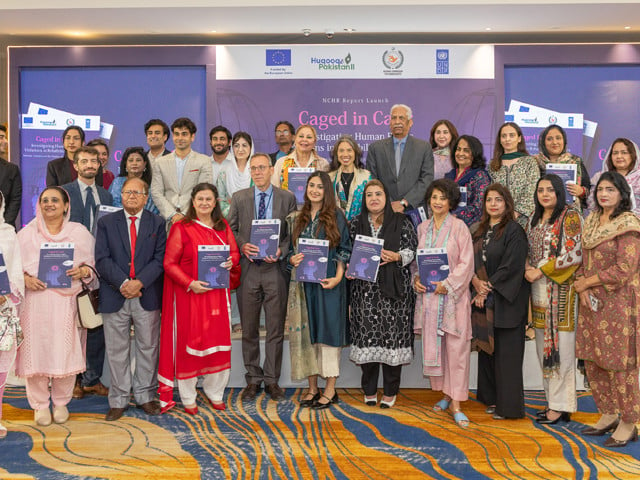
The launch event brought together government representatives, development partners, civil society stakeholders and legal experts. The gathering was aimed at promoting evidence-based discussion on how safeguards can be strengthened and accountability improved in institutional care systems.
The findings, as presented in the report, suggest that the issues identified are not limited to isolated administrative lapses but relate to broader weaknesses in oversight and enforcement mechanisms within the selected centres reviewed by the study.
NCHR Chairperson Rabiya Javeri Agha said the report centred on the experiences of people who entered care settings but did not receive adequate protection or avenues for redress. "At the heart of this report are individuals who were placed in care, but instead found themselves without adequate protection, voice, or recourse, this is not about isolated cases, it is about a system that has allowed control to take the place of care, particularly in the lives of women," she added.
Concerns over safeguards and accountability
The report highlights concerns over the effectiveness of existing monitoring systems and the extent to which legal safeguards are available to those admitted to rehabilitation centres. It also underscores the need for stronger complaint mechanisms, according to the findings shared at the launch.
By drawing on accounts from both former and current patients, the report seeks to document how institutional practices affect individuals in care. Its review of legal and administrative structures also points to weaknesses in implementation, particularly where licensing rules exist but are not fully enforced on the ground.
The publication of the report under the Huqooq-e-Pakistan II project adds to ongoing discussions among public institutions, development partners and rights advocates on improving protections in institutional care settings. The launch event was framed as an effort to encourage policy dialogue grounded in documented evidence and testimony.
Comments
No comments yet. Be the first to join the discussion!