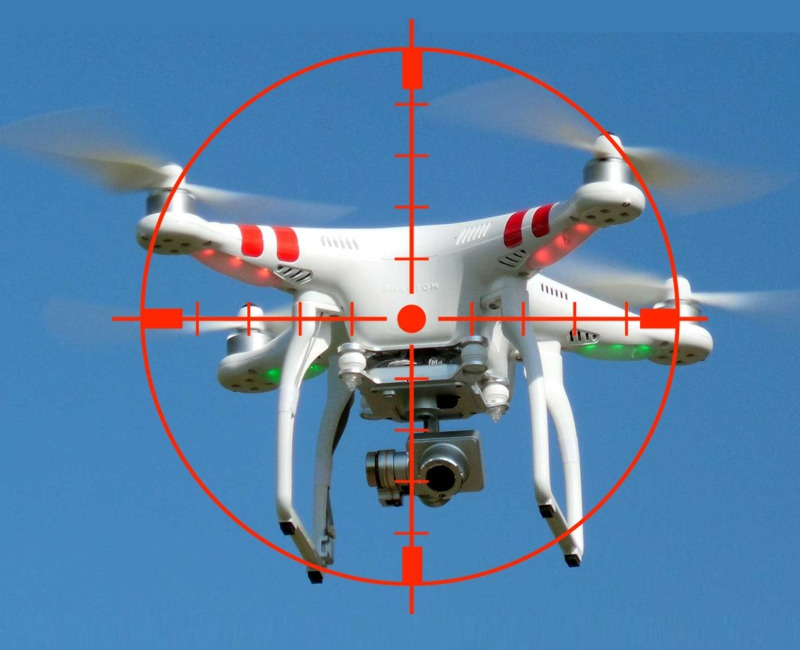
US startup promotes drones as first response to school shootings
A US startup says unarmed drones could serve as a first response to school shootings by confronting attackers before police arrive. The company has pilot programmes in Georgia and Florida and says interest is growing in Texas.

AUSTIN: A US company is proposing the use of unarmed drones inside schools as an early response to potential school shootings, presenting the technology as a way to confront attackers before police arrive.
Campus Guardian Angel has begun pilot programmes in Georgia and Florida and says interest is also growing in Texas. The system has not yet been tested in a real attack.
The idea reflects a broader debate in the United States over how to address repeated school shootings, which form part of the country’s wider gun violence crisis. Rather than focusing on tighter gun laws, the approach centres on additional security tools, similar to other proposals such as arming teachers.
How the system is meant to work
The company says a teacher would trigger an alarm on a mobile phone if a possible shooter entered a school. That alert would notify police, while a drone stationed inside the building would be launched as an initial line of defence.
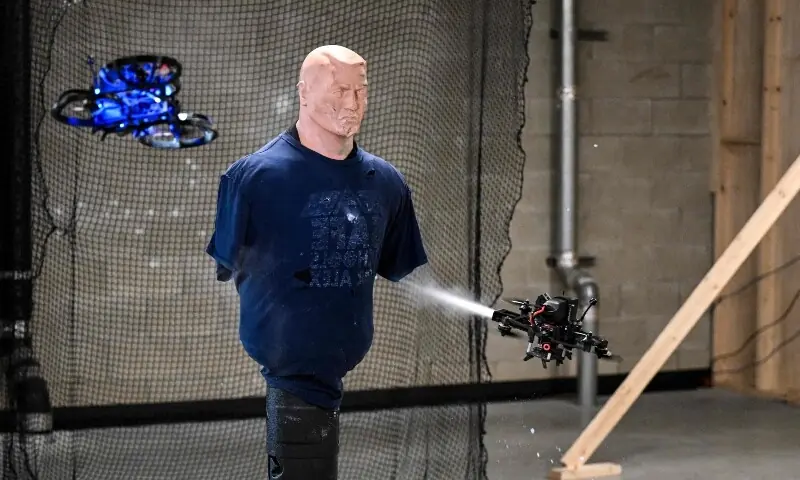
The drones are described as small, black and roughly square, weighing about two pounds, or one kilogramme. They are flown by human operators based in Austin, the Texas state capital, and are able to move through school buildings using 3D maps prepared in advance by the company.
Campus Guardian Angel says the drones are not equipped to fire bullets or other projectiles. Instead, they are intended to stop an attacker either by crashing into the person or by deploying pepper gel.
Khristof Oborski, the company’s director of tactical operations, said chief executive Bill King drew inspiration from the use of small drones in the war in Ukraine.
So he started thinking about how can you introduce this type of system to be able to combat a growing problem in the United States, with school shootings.Oborski said.
Oborski said the drone’s response would depend on the actions of the armed person. If a child carrying a gun was moving through a school corridor, he said, operators could use the drone’s two-way radio to speak to the individual and try to convince them to put the weapon down.
He added that operators remain in continuous contact with police, allowing officers to be directed to the attacker’s location.
we go straight to either kinetic impacts or we use our less lethal JPX pepper gel on the suspect.
Company pitch and wider context
According to IntelliSee, a database cited in the report, US schools recorded 233 firearm-related incidents in 2025. One of the deadliest recent attacks took place in Uvalde, Texas, in 2022, when 19 children and two teachers were killed. Police took 77 minutes to get close enough to kill the attacker.
Campus Guardian Angel offers the service through annual contracts, with pricing based on the size of a school and the number of buildings on campus. In addition to the pilot projects in Florida and Georgia, the company says some parents in Houston want the system introduced in their children’s schools.
King, a former Navy SEAL, said the company’s ideal outcome would be widespread installation without the drones ever needing to be used.
The best-case scenario is we put this in every single school in America and then never have to use it, right? Because it’s got a deterrent quality to it.he said.
He also said people frequently ask whether the drones are controlled by artificial intelligence. According to King, they are not, and he said that answer tends to reassure people.
Alex Campbell, a 30-year-old operator in the programme and a professional drone-racing competitor, said he sees his role as technical rather than military.
To be the nerd behind the scenes, to help the heroes on this Earth saving us from the bad things happening, it’s really fulfilling to be able to have a hand in that.
Comments
No comments yet. Be the first to join the discussion!