May 9, 2026
HEC approves policy for dual, double and joint degree programmes
The Higher Education Commission has approved a policy for dual, double and joint degree programmes with recognised local and international institutions. The framework sets conditions for universities and aims to expand academic collaboration while safeguarding standards.

May 9, 2026

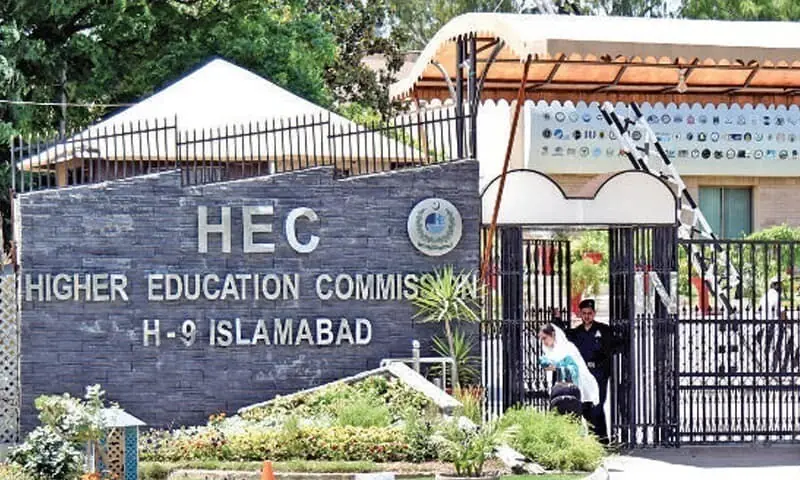
ISLAMABAD: The Higher Education Commission has approved a policy governing dual, double and joint degree programmes, setting out a formal framework for academic collaboration between Pakistani universities and recognised local and international institutions.
According to the HEC, the policy has been introduced in response to the growing globalisation of higher education, rising student mobility, expanding international academic partnerships and the need to bring Pakistan’s higher education sector in line with global standards.
The new framework applies to collaborative degree arrangements at both undergraduate and graduate levels. It outlines the conditions under which universities may partner with other institutions to offer programmes that lead to multiple or jointly awarded qualifications.
Types of degree arrangements covered
Under the policy, dual degree programmes will lead to the award of two degrees in distinct or closely related fields. Double degree programmes, meanwhile, will result in two degrees in the same discipline being awarded by partner institutions.
The third category covered under the framework is joint degree programmes, under which a single degree will be jointly awarded and signed by the collaborating institutions.
The HEC said such programmes can only be offered when universities enter into formal collaborative arrangements in accordance with the approved policy.
Conditions for universities
Institutions seeking to launch such programmes will be required to secure the necessary statutory approvals and sign a detailed memorandum of understanding. They will also have to ensure credit mapping, clearly define admission and exit requirements, disclose fee structures, put in place student protection arrangements and obtain the HEC’s no-objection certificate before introducing any programme under the policy.
The commission said the framework is intended to regulate these partnerships in a structured manner while maintaining academic standards and institutional accountability.
Expected benefits for students and universities
According to the HEC, the policy is expected to widen access for students to international learning opportunities, credit mobility, joint supervision and broader academic exposure. It said the initiative could also improve employability prospects for students.
For universities, the commission said the policy would help strengthen international partnerships, improve the relevance of curricula, enhance quality assurance and increase the global recognition of Pakistan’s higher education system.
The HEC said the policy is aimed at promoting responsible internationalisation in higher education while protecting academic standards, student interests and institutional accountability.
The policy has been introduced in view of the growing globalisation of higher education, increasing student mobility, international academic partnerships, and the need to align Pakistani higher education with global standards.
With the approval of the framework, universities seeking to offer collaborative degree pathways will now be required to follow the regulatory conditions laid down by the commission before such programmes can be launched.
0 Comments
No comments yet. Be the first to join the discussion!