April 28, 2026
Punjab Assembly passes bill setting minimum marriage age at 18 for boys and girls
The Punjab Assembly has passed the Child Marriage Restraint Bill 2026, setting 18 as the minimum marriage age for both boys and girls. The law also makes child marriage offences non-bailable and introduces stricter penalties.

April 28, 2026

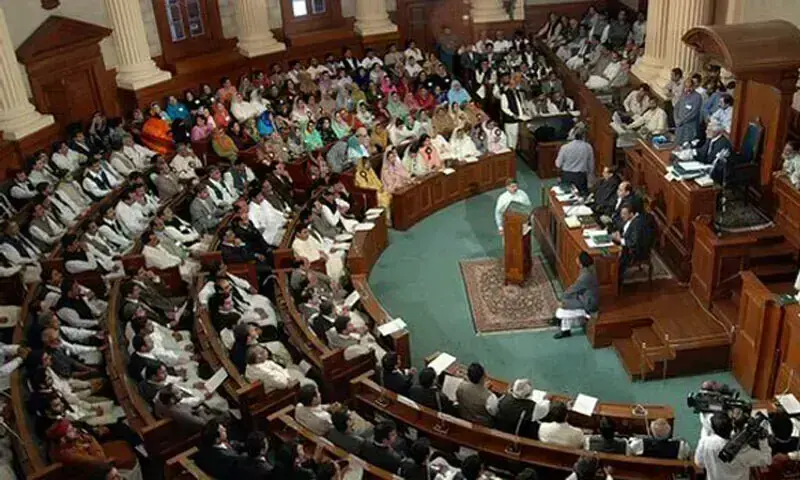
LAHORE: The Punjab Assembly on Monday approved the Child Marriage Restraint Bill 2026, fixing 18 years as the minimum legal age for marriage for both males and females and making underage marriage a non-bailable offence.
The bill was tabled in the house by Punjab Parliamentary Affairs Minister Mujtaba Shujaur Rehman. Its introduction triggered a heated discussion after lawmakers were initially not given copies of the proposed legislation.
Punjab Information Minister Azma Bokhari objected to the situation and termed it “unprecedented”. She said, “It is for the first time that members are sitting in the assembly without having receiving copies of a bill under consideration.” She stressed that lawmakers should be fully aware of the contents of any bill before voting on it.
Following her objection, Speaker Malik Muhammad Ahmad Khan ordered that copies of the bill be distributed to members immediately.
During the debate, Bokhari said both “mental and physical maturity” should be taken into account before marriage and underlined the importance of verifying age through documents including national identity cards or birth certificates. She also opposed a proposal by PML-N lawmaker Zulfiqar Ali Shah that those below 18 should be allowed to marry with court permission.
Shah, for his part, urged legislators not to place the bill above “societal values” and raised concerns about the “moral implications” of “entirely restricting early marriages”. Bokhari responded by pointing to the consequences of child marriage for girls. She also criticised the practice of “using girls to settle disputes” and questioned whether women should continue to carry the burden of social injustices. She further noted that the Federal Shariat Court had upheld similar legislation enacted by the Sindh Assembly.
After debate involving treasury and opposition members, the assembly passed the bill by a majority vote.
Amendment on child protection also approved
The house also adopted an amendment stating that the best interests of the child would be the primary consideration in all actions taken under the child marriage law, including investigation, prosecution, bail, sentencing and protective custody.
The amendment was moved by PML-N MPA Ejaz Augustine and co-signed by 13 lawmakers from treasury and opposition benches. The amendment said no child should be treated as an offender solely for being a contracting party to a child marriage.
It further stated that in proceedings under the law, “where a contracting party who is child has been taken, enticed, induced, coerced, trafficked or otherwise removed from lawful guardianship for the purpose of marriage, the court shall not treat the mere statement or purported consent of such child to reside with or accompany the adult contracting party as determinative of custody, residence or protective orders”.
Key provisions of the law
Before this measure, the minimum legal age for marriage in Punjab under the Punjab Child Marriage Restraint Act, 1929, was 18 for men and 16 for women. The position changed when Punjab Governor Saleem Haider promulgated the Child Marriage Restraint Bill 2026 as an ordinance in February. That ordinance was due to expire in May, 90 days after promulgation, making assembly approval necessary for it to continue in force.
Under the newly passed bill, nikah khawans are barred from registering child marriages. Violations can lead to imprisonment of up to one year and a fine of Rs100,000.
The legislation also provides that an adult who contracts marriage with a child can face rigorous imprisonment of up to three years, but not less than two years, along with a fine of up to Rs500,000.
Cohabitation arising from a child marriage has been classified as “child abuse”, punishable with imprisonment ranging from five to seven years and a minimum fine of Rs1 million.
The bill also introduces penalties for child trafficking linked to marriage and places responsibility on guardians for promoting or failing to stop underage marriages. It says that if a guardian or any other person, whether acting lawfully or unlawfully, promotes child marriage or child abuse, permits a child marriage to be solemnised, or intentionally or negligently fails to prevent it, that person can be punished with rigorous imprisonment from two to three years and a fine of up to Rs500,000.
All offences under the bill have been declared cognisable, non-bailable and non-compoundable. The cases will be heard exclusively by Courts of Session, and trials are to be completed within 90 days.
0 Comments
No comments yet. Be the first to join the discussion!