

Govt cuts development budget by Rs173bn to Rs837bn
The federal government has cut the PSDP by Rs173 billion, reducing the development budget to Rs837 billion. Officials said the move was aimed at protecting the IMF-linked fiscal target amid the impact of the Middle East conflict.

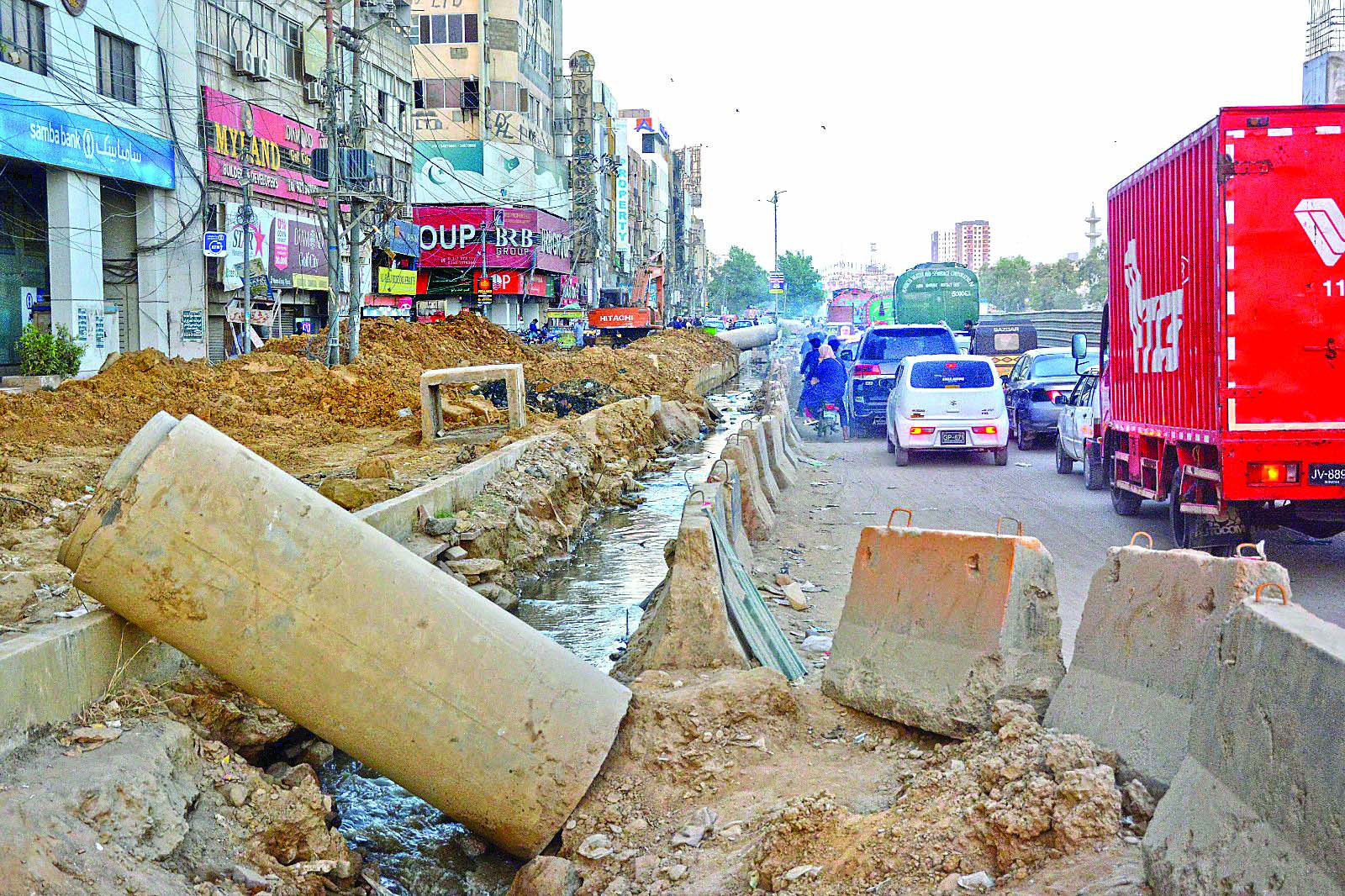
ISLAMABAD: The federal government has reduced the Public Sector Development Programme (PSDP) by Rs173 billion, bringing the annual development budget down to Rs837 billion from the level approved by the National Assembly in June last year, according to government officials.
Officials said the reduction was made in two stages. A cut of Rs100 billion was implemented on March 25, followed by another Rs73 billion reduction last week. They said the move was aimed at offsetting the impact of the Middle East conflict on the primary budget surplus target agreed with the International Monetary Fund before the war.
For the current fiscal year, the National Assembly had approved a development budget of slightly over Rs1 trillion, which was already far below the demands submitted by various ministries. The government had committed to achieving a primary budget surplus of 2.6% of GDP under its arrangement with the IMF and, assured the lender during recently concluded staff-level talks that it would meet the target despite the adverse effects of the Middle East conflict.
However, Fitch said on Monday that Pakistan would miss the primary budget surplus target despite making adjustments within the budget.
Finance Minister Muhammad Aurangzeb met Jihad Azour, Director of the Middle East and Central Asia Department of the IMF, on the sidelines of the World Bank-IMF Spring Meetings. A finance ministry handout issued on Tuesday said Aurangzeb ‘expressed appreciation for the successful staff-level agreement and conveyed his expectation for early approval by the IMF Executive Board to sustain the momentum of Pakistan's reform programme’.
The wording of the statement indicated that the government had not yet obtained a date for the IMF Executive Board meeting to approve the $1.2 billion loan tranche, as the handout used the word expectation.
Major reductions across sectors
Officials said the planning ministry reduced annual allocations of nearly all ministries on a proportional basis, with a few exceptions. The largest single cut of Rs38 billion was made in the National Highway Authority’s budget, reducing it to Rs185 billion. So far, the NHA has spent Rs73 billion against its annual allocation, which reflected slow releases by the finance ministry.
The allocation for water sector projects was reduced by Rs23 billion, while the Water Resources Division’s overall allocation was cut by Rs123 billion to Rs106.6 billion. Its spending during the first nine months stood at Rs47 billion.
The allocation for provincial schemes was reduced by Rs22.5 billion to Rs79.1 billion, with nine-month spending recorded at Rs36.2 billion. The Power Division’s budget was cut by Rs16 billion to Rs75 billion, while its utilisation in nine months amounted to Rs41 billion.
The merged districts of Khyber-Pakhtunkhwa faced a total cut of Rs11.2 billion, leaving a revised allocation of Rs54.2 billion. Budgets for Azad Kashmir and Gilgit-Baltistan were also reduced again.
The education ministry’s development allocation was lowered by Rs5.5 billion to Rs26.6 billion. Another Rs7.2 billion was cut from the Higher Education Commission’s budget, which now stands at Rs35 billion. The health sector’s development budget was reduced by Rs2.4 billion to Rs11.6 billion, while the defence ministry’s development allocation was cut by Rs1.8 billion to Rs9 billion.
Protected allocations and criticism
Officials said schemes recommended by parliamentarians were protected from the second round of cuts after their budget had already been reduced by Rs7 billion last month. The first revised allocation for parliamentarians’ schemes under the Sustainable Development Goals stands at Rs63 billion, of which Rs44 billion has already been spent in relaxation of limits set by the finance ministry.
The allocation of the Ministry of Planning and Development was also protected in the latest reduction. Officials said this was done to safeguard flood rehabilitation projects in Balochistan.
Planning Minister Ahsan Iqbal criticised the finance ministry’s approach, saying it was cutting development spending instead of creating fiscal space through current expenditure controls and stronger revenue collection.
During the first nine months of the current fiscal year, development spending totalled Rs409 billion, or 41% of the original allocation, indicating that utilisation had already remained low compared with the authorisation issued by the Ministry of Planning.
The PSDP has traditionally been used to make up for excessive current expenditure and revenue shortfalls. Despite the Rs173 billion reduction in the PSDP, the Prime Minister’s Office has instructed the planning ministry to release funds for the construction of a jail in Islamabad, health schemes and the safe city project.
Comments
No comments yet. Be the first to join the discussion!


