

Pakistan-China trade through Khunjerab Pass 'in full swing,' record revenue collected at Sost
Trade between Pakistan and China via the Khunjerab Pass is in full swing with record Rs10.16bn revenue collected at Sost Dry Port. Local traders, however, flag concerns over unimplemented tax exemptions.

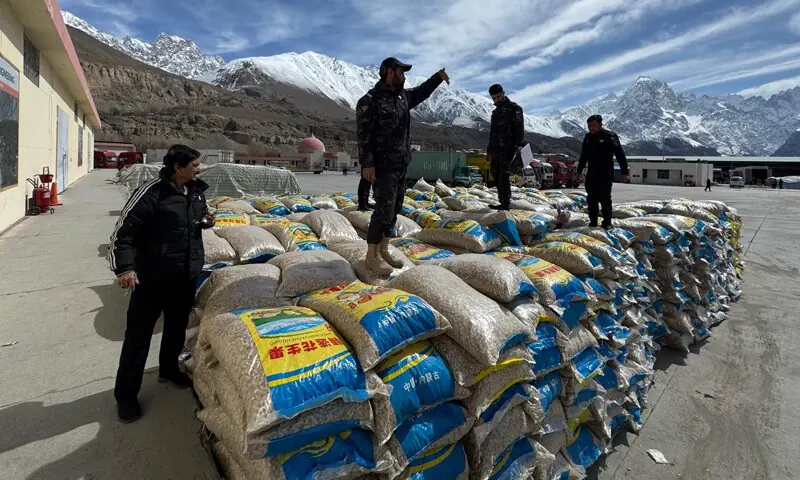
GILGIT: Trade activity between Pakistan and China through the Khunjerab Pass is continuing at a robust pace, with Pakistani exports to China and Central Asian states witnessing an increase this year. However, local traders have raised concerns over the non-implementation of a prime ministerial announcement regarding tax exemptions on imported goods meant for local consumption.
Record revenue collection at Sost Dry Port
Pakistan Customs Collector for Gilgit-Baltistan, Shahid Jan, said that 1,774 consignments imported from China via the Khunjerab Pass had been cleared at Sost Dry Port up to March. He added that Pakistan Customs collected Rs10.16 billion in revenue at Sost from these consignments.
"This is a record revenue collection at Sost Dry Port, despite its closure for 70 days last year following a protest sit-in by GB traders, which blocked trade activities between the two countries," he said.
TIR trade with Central Asian states operational
Trade with Central Asian countries under the Multimodal Transports Internationaux Routiers (TIR) system through the Khunjerab route has also remained operational, further underscoring the importance of the cross-border corridor for Pakistan's regional commerce.
Traders' concerns over tax exemptions
Despite the positive trade figures, local traders in Gilgit-Baltistan have voiced their dissatisfaction over the failure to implement the prime minister's announcement concerning tax exemptions on imported items intended for local consumption. The non-implementation of this policy commitment has been a point of contention among the trading community in the region.
The Khunjerab Pass, situated at an elevation of over 4,600 metres, serves as a critical trade artery connecting Pakistan and China and facilitates the movement of goods between the two nations as well as onward transit to Central Asian markets. The pass and the associated Sost Dry Port remain central to bilateral commerce, with trade volumes and revenue figures reflecting its growing significance.
The record revenue collection at Sost is particularly notable given that the dry port was shut for 70 days last year due to a protest sit-in by Gilgit-Baltistan traders, which had effectively halted cross-border trade activities during that period. The recovery in trade volumes and revenue this year suggests that commercial operations have bounced back strongly following the disruption.
The increase in Pakistani exports to China and Central Asian nations through the Khunjerab route signals a growing utilisation of this overland trade corridor, even as traders continue to press for more favourable trade conditions, including the implementation of the promised tax exemptions.
Comments
No comments yet. Be the first to join the discussion!


