March 13, 2026
Netanyahu says Israel’s war on Iran aims for 'Messiah’s return'
Israeli PM Netanyahu claims Israel’s campaign in Iran is paving the way for the Messiah’s return, warns Iranian and Hezbollah leaders, and says the region is being reshaped.

March 13, 2026

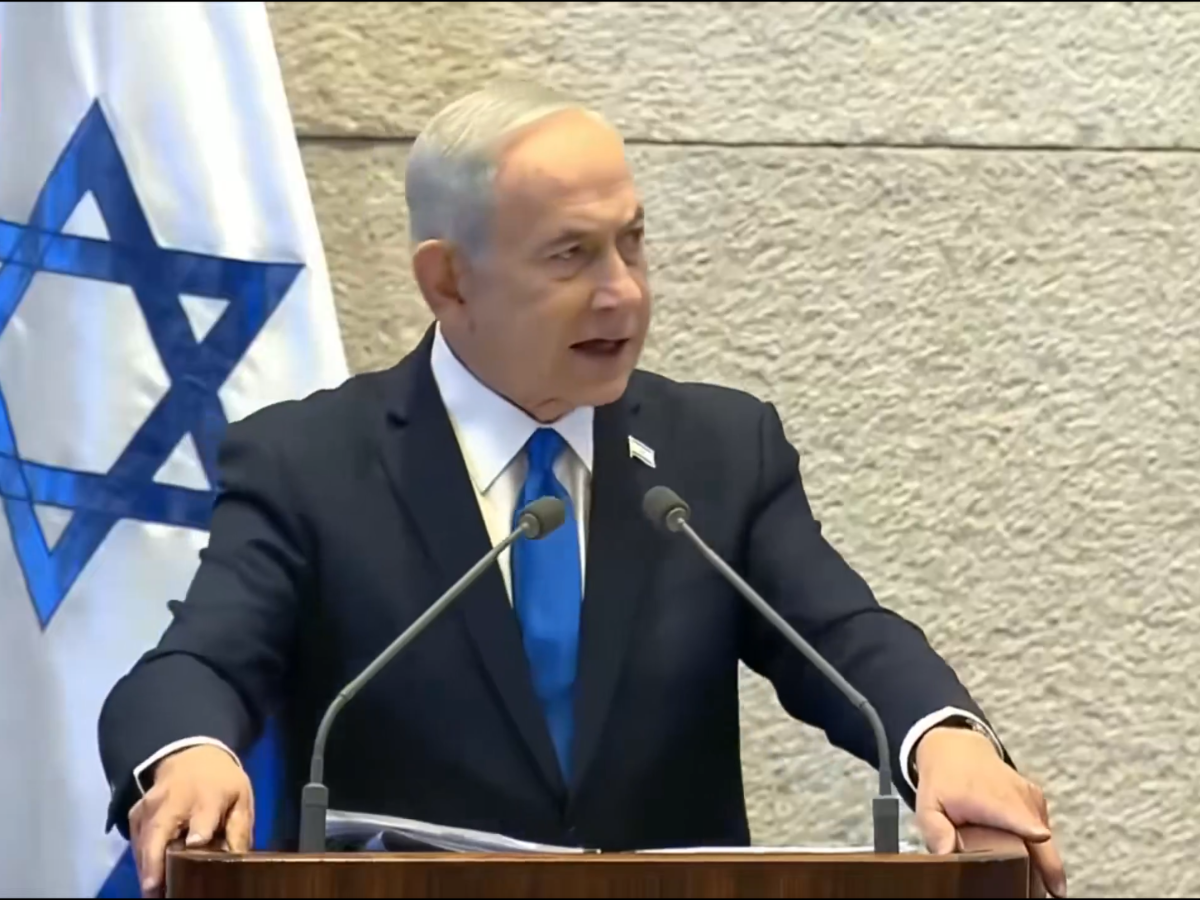
TEL AVIV: Israeli Prime Minister Benjamin Netanyahu on Friday claimed that Israel’s military campaign against Iran is advancing toward what he described as the eventual “return of the Messiah.”
Speaking publicly, Netanyahu stated, “We will make it to the return of the Messiah, but this will not happen next Thursday.”
He added that reaching this goal, according to him, would require rebuilding the temple, which implies the destruction of current structures, including the Dome of the Rock and Al-Aqsa Mosque.
Netanyahu also asserted that Israel is achieving “unprecedented” gains in its ongoing campaign, which he said is reshaping the Middle East and strengthening Israel’s position as a rising regional superpower.
Addressing Iran’s leadership, Netanyahu warned Supreme Leader Mojtaba Khamenei and Hezbollah chief Naim Qassem, saying he would not “issue life insurance” to either. He further stated that Israel’s objectives include creating conditions that could eventually bring an end to Iran’s current government, though he noted that the ultimate decision rests with the Iranian people.
His remarks are likely to raise tensions across the region, particularly given the religious and political sensitivities surrounding the Al-Aqsa Mosque and the broader Iranian-Israeli conflict.
From a Muslim perspective, the Dome of the Rock and Al-Aqsa Mosque hold profound religious significance. Al-Aqsa is considered the third holiest site in Islam after Mecca and Medina, and the Dome of the Rock is traditionally believed to mark the spot from which the Prophet Muhammad ascended to heaven during the Isra and Mi'raj.
Muslims view the Jewish concept of the Messiah differently from Jewish or Christian interpretations. While Judaism sees the Messiah as a future earthly king, and Christianity identifies Jesus as the Messiah who has already come, Islam teaches that Jesus (Isa) will return near the end of times as a sign of justice and to restore peace.
Any suggestion of rebuilding the Jewish Temple on this site is therefore seen as a direct threat to Islamic sovereignty, which has led to strong objections from Muslims worldwide. Many Muslims believe that the figure expected by some as a Jewish Messiah—who brings worldly power and deception—is in fact the Dajjal (the Antichrist or "False Messiah").
Netanyahu’s linking of military goals to religious prophecy has therefore been controversial, as it combines a political agenda with theological aspirations, stirring both global and regional concerns. Many Muslims and observers see such rhetoric as a challenge to interfaith harmony, as well as a potential trigger for escalating conflicts between Israel and neighboring Muslim-majority countries.
4 Comments
No comments yet. Be the first to join the discussion!