

Shehbaz unveils $1bn AI push by 2030, calls Indus AI Week a 'game-changer' for Pakistan
Prime Minister Shehbaz Sharif unveiled a $1 billion investment plan for AI by 2030, aiming to revolutionize Pakistan's economy and empower youth through education and training.
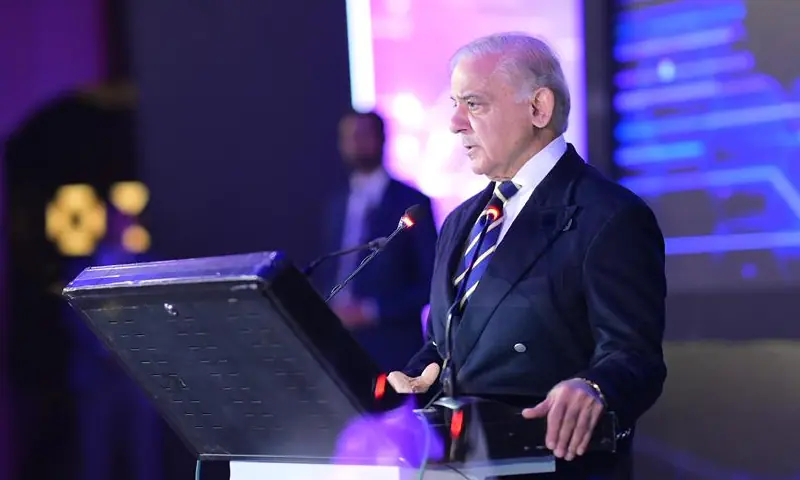
-- PM announces $1bn investment, calls AI a game-changer for economy and governance
-- AI curriculum to be introduced nationwide, including AJK, GB and remote Balochistan
--1,000 fully funded PhD scholarships, 1 million non-IT professionals to be trained in AI
-- Agriculture, industry and youth empowerment at core of Pakistan’s AI roadmap
ISLAMABAD: Prime Minister Shehbaz Sharif on Monday announced an ambitious plan to invest $1 billion in artificial intelligence (AI) by 2030, declaring that Pakistan was ready to embrace emerging technologies and compete globally in the digital economy.
Addressing the inauguration of Indus AI Week 2026 in Islamabad, the premier said the investment would play a pivotal role in building a robust AI ecosystem in the country. Indus AI Week, being held from February 9 to 15, has been billed as Pakistan’s official national platform for artificial intelligence, bringing together policymakers, innovators, investors and talent.
“The government of Pakistan is committed to investing $1 billion in AI by 2030, which will go a long way in building an AI ecosystem in our country,” PM Shehbaz said, describing the initiative as “nothing short of a game-changer” for the nation’s technological future.
As part of the roadmap, the prime minister announced the introduction of an AI curriculum in all federally run schools as well as educational institutions in Azad Jammu and Kashmir and Gilgit-Baltistan. He added that the programme would also be extended to remote areas of Balochistan to prepare youth for leadership roles in the digital economy.
The premier further revealed that the government would offer 1,000 fully funded PhD scholarships in artificial intelligence by 2030 to develop world-class research capacity. In addition, a nationwide programme would be launched to train one million non-IT professionals in AI skills, aimed at enhancing productivity and improving livelihoods.
“Pakistan is absolutely ready to accept the challenge and walk with our global partners with great commitment and dedication,” he said, noting that agriculture, mining and minerals would be key sectors benefiting from AI-driven transformation. He stressed that empowering youth—who make up around 60 per cent of the population—with modern knowledge and techniques was central to the government’s vision.
PM Shehbaz said the shift towards AI would unlock unprecedented gains in agricultural productivity, industrial growth and women’s empowerment, while also transforming IT technicians into AI experts through targeted programmes.
The prime minister also reflected on earlier digital reforms, recalling initiatives launched during his tenure as Punjab chief minister, including laptop distribution schemes, e-libraries, e-stamping, and the computerisation of land records in collaboration with the World Bank. He said these measures helped curb corruption, improve governance, and boost revenue collection.
He highlighted the launch of Pakistan’s first Safe City project and IT university in Lahore, and pointed to ongoing digitalisation efforts at the Federal Board of Revenue, including the use of scanners and digital tools at ports to curb smuggling and tax evasion.
“Our commitment is solid and unwavering,” the prime minister said. “We will keep marching forward until Pakistan finds its rightful place among the comity of nations.”
IT Minister Shaza Fatima Khawaja, speaking at the event, said Indus AI Week aimed to enhance coordination between universities, governments, and international technology firms. She added that the Pakistan Digital Authority was preparing a nationwide digital master plan to guide future transformation.
Planning Minister Ahsan Iqbal, in his remarks, said the world had entered an era where intelligence itself had become a factor of production, with nations now competing on ideas, data and technology rather than commodities. He described artificial intelligence as a bigger disruptor than electricity or the internet and noted that Pakistan’s journey into the digital domain began over two decades ago with early IT policies, the establishment of Nadra and investments in advanced human capital.
The government approved the National AI Policy in July 2025 to democratise access to AI, improve public services and create new avenues for employment and innovation. However, officials acknowledge that its broader implementation has slowed due to proposed changes in the AI Council and limited provincial engagement, with Indus AI Week described as the first major step towards building awareness and readiness nationwide.
Comments
No comments yet. Be the first to join the discussion!


