Rana Sanaullah calls for national unity as Senate condemns Balochistan terror attacks
Rana Sanaullah urges political unity against terrorism following recent Balochistan attacks. The Senate condemns violence and emphasizes the need for stronger counterterrorism measures.

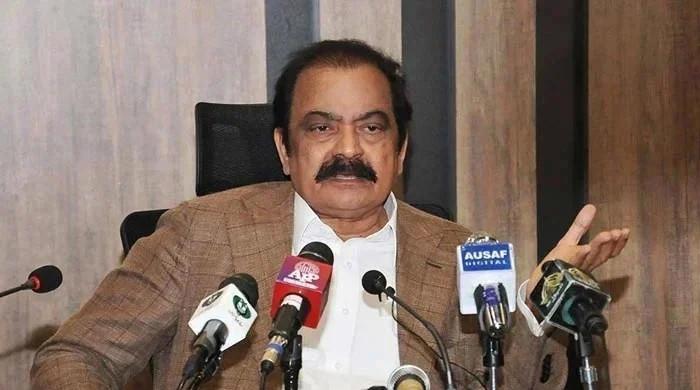
ISLAMABAD: Special Assistant to the Prime Minister on Political Affairs Rana Sanaullah Khan on Monday urged all political parties to adopt a unified national stance against terrorism, declaring the perpetrators of recent attacks in Balochistan as “enemies of Pakistan” acting on the directives of “anti-Pakistan elements.”
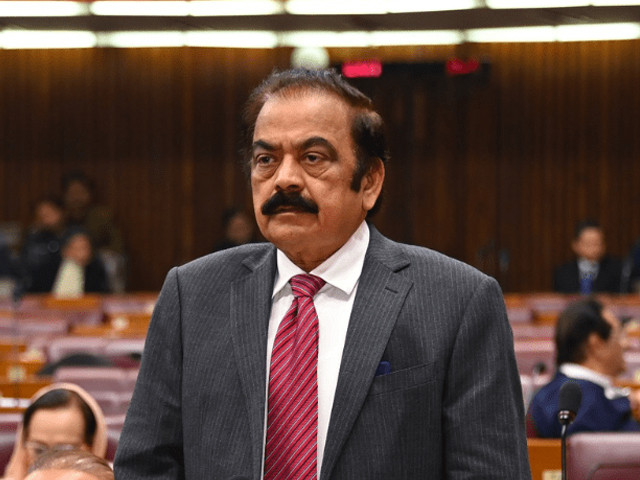
Speaking in the Senate while responding to opposition leader Raja Nasir Abbas, Sanaullah said around 177 terrorists had been eliminated in recent operations, while 17 law-enforcement personnel and 33 civilians were killed in the latest wave of violence.
“These elements cannot be portrayed as angry or aggrieved groups,” he said, adding that the attacks reflected organised militancy, not isolated criminal acts.
Providing a breakdown of casualties among security forces, Sanaullah said 10 police personnel, six Frontier Corps members and one Levies official were among those martyred. He said civilians were killed when terrorists stormed homes and residential areas.
Sanaullah said militants had repeatedly stopped buses, checked passengers’ identity cards and executed people in front of their families, including women and children. He cited similar brutality in attacks on trains, including the Jaffar Express, where passengers were taken hostage, humiliated and killed.
“These are acts of extreme savagery that no sane human being can justify,” he said, rejecting the narrative that the attackers were merely disgruntled elements.
He also claimed that after recent operations, bodies of killed terrorists were forcibly taken from hospitals in Quetta, raising questions about the motives of those claiming to speak for “rights”. He added that security forces had foiled attempts to breach the Quetta Red Zone and neutralised terrorists wherever they attempted to operate.
Recalling the Army Public School tragedy, Sanaullah said the nation had united under then prime minister Nawaz Sharif, leading to counterterrorism operations that pushed militancy “close to zero”.
He rejected linking militancy to political demands such as elections, saying the attackers had no public mandate, no political agenda and no belief in democracy. He urged political parties to stand with law-enforcement agencies and the armed forces and honour the sacrifices of martyrs and their families.
Separately, Defence Minister Khawaja Asif said a day earlier in Sialkot that Pakistan’s findings showed that “all linkages point towards India” in the recent Balochistan attacks claimed by the banned Balochistan Liberation Army (BLA). He said the group was internationally recognised as a terrorist organisation and sought foreign funding by maintaining visibility through attacks on civilians and government employees.
Senate passes resolution condemning terrorism
Meanwhile, the Senate unanimously passed a resolution condemning the recent terrorist attacks in Balochistan, offering condolences to the families of the victims and wishing the injured a speedy recovery.
Moved by Law Minister Azam Nazeer Tarar, the resolution paid tribute to the courage and sacrifices of security forces and law-enforcement agencies and reaffirmed the state’s commitment to peace, development and political inclusion in Balochistan.
It stressed that terrorism would not be allowed to succeed and called for transparent, swift and conclusive investigations to bring perpetrators, facilitators and local and international sponsors of terrorism to justice. The resolution also urged stronger intelligence coordination, border security and counterterrorism mechanisms, particularly in Balochistan.
TTAP condemns attacks, blames governance failure
Earlier, opposition alliance Tehreek-e-Tahafuz-e-Aeen Pakistan (TTAP) also condemned the attacks, expressing grief over the deaths of security personnel and civilians.
In a statement posted on X, TTAP said the scale of violence reflected a complete failure of the provincial government and law-enforcement agencies, adding that the writ of the state had become severely limited in the province.
“How long will we keep turning a blind eye to the fact that a Balochistan government lacking public support is only concerned with prolonging its rule, not with people’s lives?” the statement said.
TTAP maintained that terrorism could only be defeated by governments whose moral standing was not in question, reiterating its demand for free and fair elections and truly representative governance.
Comments
No comments yet. Be the first to join the discussion!