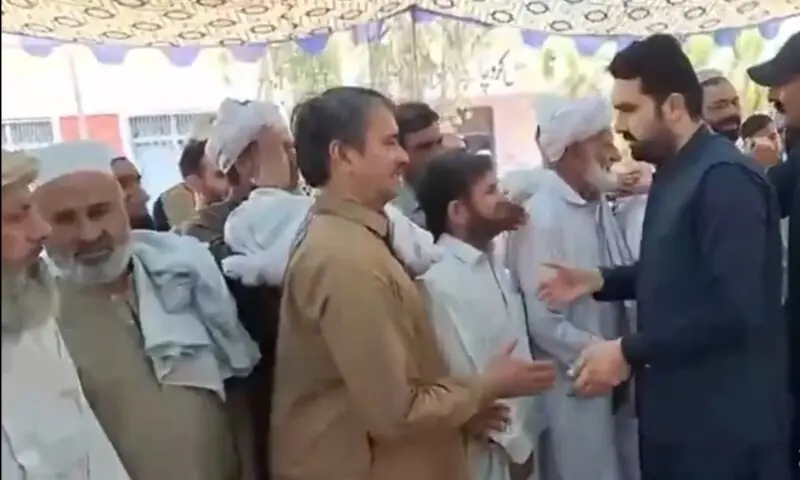
KP CM pens letter to Maryam Nawaz, slams Punjab govt over hostile treatment during Lahore visit

- CM Afridi calls protocol breaches, excessive security ‘undemocratic and reprehensible’
- Says public spaces, markets, and motorway rest areas sealed, alleging coordinated social media campaign to defame KP CM
- CM invites Maryam Nawaz to KP to witness democratic respect for provincial office
PESHAWAR, Dec 29 (APP): Khyber Pakhtunkhwa Chief Minister Sohail Afridi has expressed “deep concern” over what he described as discourtesy, hostility, and intimidation during his three-day visit to Lahore, calling the treatment meted out to him “undemocratic, reprehensible, and contrary to national unity.”
In a detailed two-page letter addressed to Punjab Chief Minister Maryam Nawaz on Monday, CM Afridi formally lodged his protest over the conduct of the Punjab government, highlighting multiple incidents that he said reflected a deliberate attempt to undermine his constitutional office.
In the letter, posted on X by the KP government, CM Afridi stated, “I write to you with deep concern and strong exception to the manner in which my recent visit to the Province of Punjab was handled and the events that deliberately unfolded during and after the visit.” He emphasized that the sequence of actions was neither accidental nor administrative but represented conduct “wholly incompatible with the dignity of constitutional office and the spirit of inter-provincial respect.”
وزیراعلیٰ خیبرپختونخوا محمد سہیل خان آفریدی نے اپنے دورہ لاہور کے دوران نامناسب رویہ پر احتجاجی مراسلہ وزیراعلیٰ پنجاب مریم نواز کو ارسال کردیا
جس انداز میں میرے دورہ کے دوران معاملات کو ڈیل کیاگیا وہ کوتاہی نہیں بلکہ جان بوجھ کر سب کیاگیا، جو ہوا وہ انتظامی خامی تھی نہ ہی… pic.twitter.com/BUhoEGIiZ7
— Government of KP (@GovernmentKP) December 29, 2025
Afridi noted that he had undertaken the visit in his capacity as KP Chief Minister. “Regrettably, the treatment accorded to me was marked by discourtesy, unnecessary hostility, and protocol deviations that cannot be justified under any accepted standard of inter-provincial engagement,” he said. He criticized the Punjab government for adopting an “extraordinary and excessive security posture,” which included sweeping detentions, visible enforcement theatrics, and forced blackouts in public areas—measures that, he said, sent “a message of intimidation rather than cooperation.”
The KP CM alleged that public spaces, including food streets, markets, and even motorway rest areas, were completely sealed during his visit, inconveniencing ordinary citizens. “Free access, as provided for in the Constitution, was even denied at motorway rest areas,” Afridi wrote.
He also condemned a coordinated and malicious social media campaign that accompanied his visit, alleging that serious insinuations, including false links to narcotics, were circulated through accounts “widely perceived to be aligned with, or operating under the umbrella of, the Government of Punjab.” Afridi warned that such actions—the use of state-linked digital platforms to defame a sitting provincial chief minister—were “unacceptable, irresponsible, and institutionally indefensible.” He stressed that allegations of such gravity must be supported by evidence and lawful process; anything short of that, he said, constitutes character assassination.
Afridi argued that “taken together—protocol degradation, excessive policing optics, and synchronised digital vilification—the pattern is too consistent to be dismissed as coincidental,” suggesting a deliberate intent to humiliate rather than engage. He warned that such conduct undermines federal harmony, erodes public trust in provincial institutions, and sets a dangerous precedent where constitutional officeholders are targeted through innuendo rather than formal channels.
In his letter, Afridi termed the Punjab government’s conduct “beneath the status of a provincial government,” noting it damaged the “collective credibility of federating units.” He concluded with a call for accountability, stating, “I place on record my strong protest and rejection of the treatment meted out to me and of the defamatory narratives propagated during this episode. I expect that your government will ensure such conduct—administrative as well as digital—is neither repeated nor normalized.”
‘Undemocratic and reprehensible’ conduct
Separately, during a cabinet meeting in KP, Afridi condemned the Punjab government’s behavior as “undemocratic, reprehensible, and contrary to national unity.” He accused Punjab authorities of perpetrating violence against his cabinet members, blocking roads, forcibly shutting markets, and even turning off lights during a visit to Mazar-e-Iqbal. “The whole world witnessed the treatment of me and my cabinet members,” he said, warning that such attitudes “fan flames of hatred and division” in a politically and economically unstable country.
وزیراعلیٰ خیبر پختونخوا محمد سہیل آفریدی کا صوبائی کابینہ سے اہم خطاب!
وزیراعلیٰ خیبر پختونخوا محمد سہیل آفریدی نے اپنے تین روزہ پنجاب دورے کے دوران پنجاب حکومت کے رویّے پر شدید تحفظات کا اظہار کیا۔ انہوں نے کہا کہ پنجاب حکومت کا طرزِ عمل غیر جمہوری، قابلِ مذمت اور قومی یکجہتی… pic.twitter.com/BHp7q0Rnzz
— Government of KP (@GovernmentKP) December 29, 2025
Afridi instructed KP officials to uphold cultural hospitality norms for visiting officials from other provinces. He also highlighted pending funds from the federal government under the Accelerated Implementation Programme (AIP) for merged districts of KP, noting that work remained stalled due to non-release of Rs 4,758 billion. “It has been more than half a year, and we have not yet received the funds under AIP,” he said, adding that even committed amounts were delayed.
Altercations and public disruptions during the visit
Afridi had arrived in Lahore on Friday around 4:30 pm to launch PTI’s street movement and visit the Punjab Assembly. However, his visit was marred by confrontations between his entourage and security officials, as well as heated exchanges with journalists. The KP CM criticized Punjab authorities for their “rude behavior,” saying it reflected a “mean mentality” that could not be accepted in a civilized society.
He also invited CM Maryam Nawaz to visit KP, asserting that she would see firsthand “how democratic forces respect the office of a provincial chief executive.” During his stay, Afridi’s entourage was prevented from accessing Food Street for dinner, with all restaurants shut, lights turned off, and the public evicted—an incident he cited as emblematic of the Punjab government’s attitude.
Afridi warned that such actions, if continued, risk sowing hatred and undermining national unity, particularly at a time when the country faces political and economic instability. He condemned the Punjab government’s conduct in the “strongest of words,” stating that it reflected moral and intellectual depravity and was detrimental to the federation and the public trust.
1 Comment
No comments yet. Be the first to join the discussion!