New man in the House
The piece reflects on Keir Starmer’s removal and Andrew Burnham’s move into the PM role, with historical notes on sitting in Parliament, plus brief Pakistan and fuel-price observations.

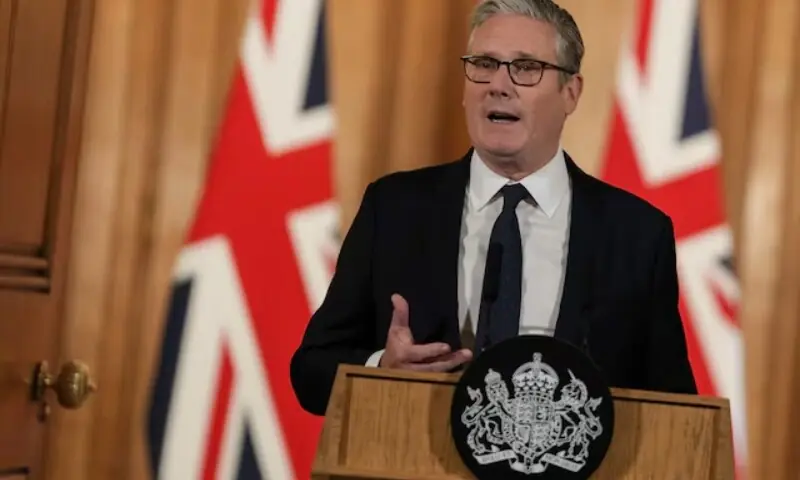
I wonder if Keir Starmer, who was dropped as British PM last week, would really have gone to the USA to see the World Cup final, if England had made it. Well, it didn;t, thus depriving him of the pleasure of a final meeting with US President Donald Trump, who was at the final, even though the USA had been knocked at an earlier stage, despite having its best players in its ranks, after Trump got FIFA to reverse the red card given to a USA player.
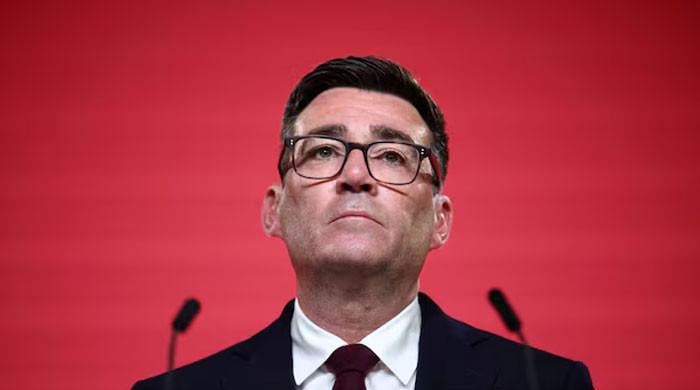
I wonder if Starmer could have managed something of the sort. He has been replaced by Andrew Burnham, who is the first British PM since I don’t know when to become PM immediately after he entered Parliament. It’s happened before, I suppose, certainly in ex-colonies which have elected their first assembly, but even in Pakistan, it’s rare. Muhammad Khan Junejo was a first-time MNA back in1985, his previous election was in 1962 and 1965, when he was elected to the West Pakistan Assembly. He did not take his seat on either occasion, as he was inducted in the West Pakistan Cabinet. (In those days, you could not be a member of an assembly if you were a minister, though ministers did attend the House).
And then of course there was Benazir Bhutto, who had become PM in 1988, after first being elected an MNA. And when Mian Nawaz Sharif became PM in 1990, though he had been elected a member of the House for the third time, it was the first time he was taking his seat. On the previous two occasions, he had preferred to become Punjab CM after taking the Punjab Assembly seat he had won.
India has provided, and in this 21st century, an example of a PM sitting in the Upper House, the Rajya Sabha. Dr Manmohan Singh, the bureaucrat tapped to be a politician, who wished to avoid the hurlyburly of the Lok Sabha. That sounds suspiciously like Disraeli, who accepted the Earldom of Beaconsfield, while still PM, instead of afterwards, so that he could go to the Lords. That, of course, when it wasn’t a problem for the PM to be a member of the Lords.
Nowadays, though, it is, and it was only when the life peerages were introduced that peers were allowed to give up their titles. Previously, the most they could do was stop attending the House of Lords, though they continued to have all the disabilities and privileges of their title, like being hung only with a silken rope, not a hemp one, or not being allowed to contest elections for the Commons.
The convention (in the UK it is not legislated) was that a member of the Lords could not be made PM. The claim that it was a convention arose in 1923, when the Leader of the Tories and |PM|, resigned after a diagnosis of throat cancer (from which he died later). Lord Curzon (the former Viceroy of India) was the frontrunner, but was also felt to be insufferably arrogant. So it was more to placate him than anything else that it was proclaimed by Tory MPs that of course, a Lord as PM was not possible.
Over here, of course, it is not a constitutional convention, but a constitutional requirement, that the PM (or CMs) must be a member of the National (or provincial) Assembly. Not so in India, though only Manmohan Singh used this hack.
Anyhow, over here we’ve been privileged to have daily price changes for petrol. Has anyone noticed the benefit the government gets. The pump price was Rs 310.71 per litre.Now, only a week later, it’s Rs 335.18 per litre, Rs 24.47 higher, but instead of a sudden shock, it’s been gradual, with the biggest raise being the very first, of Rs 5,74 per litre. One thing puzzles me though. This weelend that the Saturday price would last till Monday morning, because Platt’s didn’t publish over the weekend. Didn’t they know this when they decided on the mechanism?
I see a peculiar coincidence in the death of Sir Gary Sobers just before the beginning of the the Pakistan tour of the West Indies, as it was against Pakistan, nearly 70 years ago, that he scored the 365 not out that remained the Test record for so long. It was the first of his 29 Test centuries, itself for a long time a record.
Sobers was an extraordinary allrounder. He was a three-in-one bowler (Medium pace, finger spin and wrist spin), who took over 200 Test wickets, and good enough a close-in fielder to take over 100 Test catches. However, an ungrateful Barbados never made him Prime Minister.
There’s one thing he had in common with left-arms spinner Bishen Bedi of India and our own left-arm quick Waseem Akram. He had an Australian wife.
Comments
No comments yet. Be the first to join the discussion!