Lebanese president links Hezbollah disarmament to Israeli withdrawal and state-led reconstruction
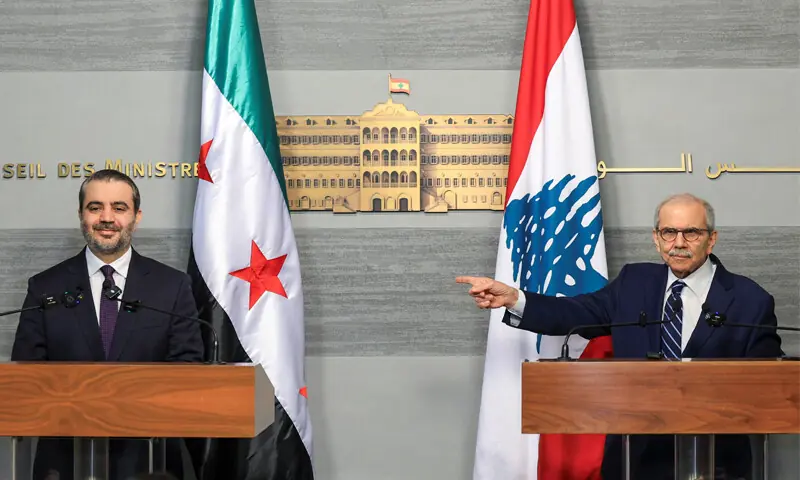
Lebanese President Joseph Aoun said Hezbollah’s disarmament depends on Israeli withdrawal, army control and state-run reconstruction. Prime Minister Nawaf Salam meanwhile said Israel’s initial pullback from southern Lebanon marked the start of a broader process.

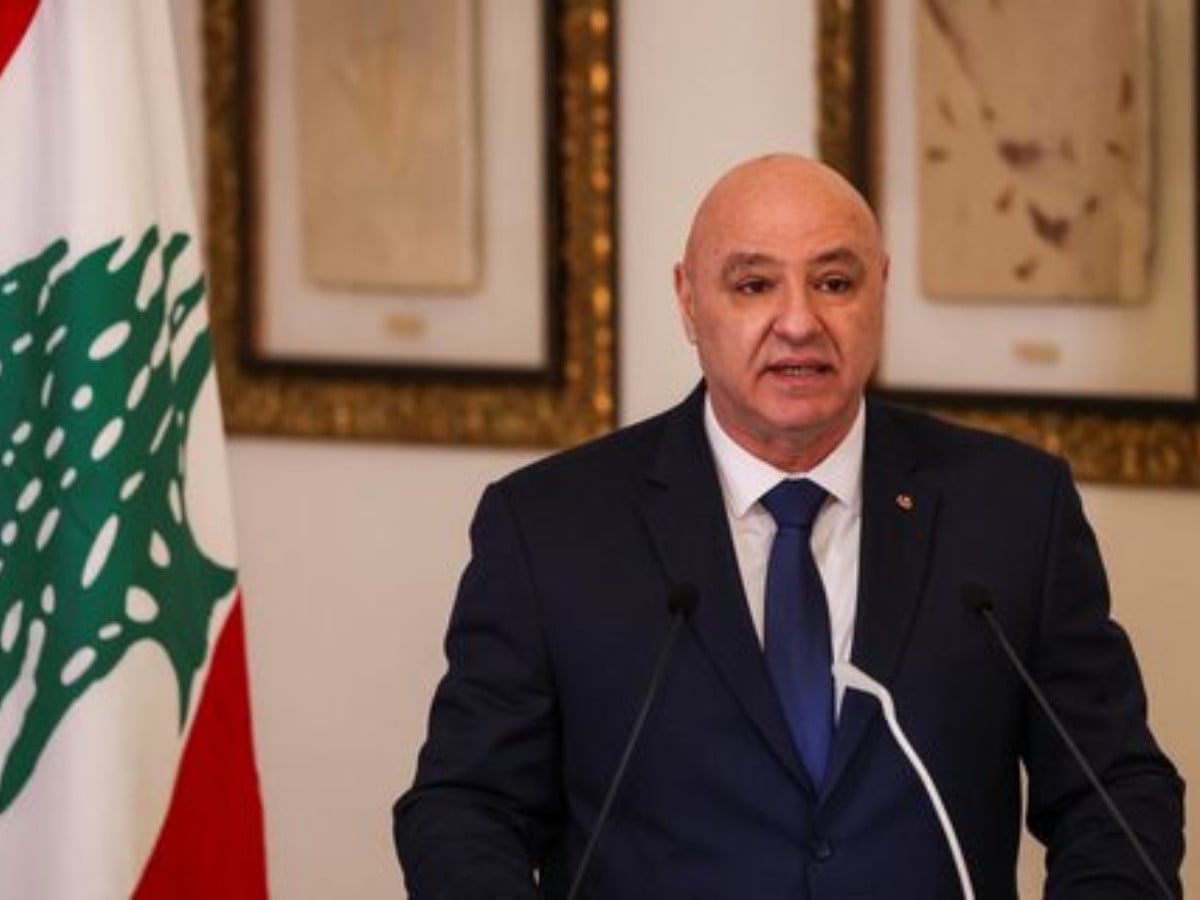
BEIRUT: Lebanese President Joseph Aoun has outlined three conditions he said are necessary for Hezbollah to be disarmed, beginning with an end to Israel’s occupation of territory in southern Lebanon, according to a statement issued by the Lebanese presidency on Wednesday.
Aoun made the remarks at a dinner hosted by Lebanon’s ambassador to Washington, Nada Hamadeh Mouawad, in honour of the president and his delegation. Members of the US Congress and officials from the US administration attended the event, which took place on Tuesday evening at the end of Aoun’s official visit to Washington, where he also met US President Donald Trump.
Addressing the gathering, Aoun said Hezbollah’s weapons issue could only be resolved through a broader state-led process.
“Hezbollah can be disarmed if we are honest about what it truly requires: ending the occupation, the army assuming full control, and a reconstruction program managed solely by the state”, he said.
Aoun said Hezbollah was composed of Lebanese citizens and described the movement as having been shaped over four decades by ideological, social and military investment in an armed organisation operating beyond state authority. He said that while this did not lessen the urgency of disarmament, it made the approach to achieving it more critical.
Aoun cites disarmament models
Referring to other conflicts, including the Revolutionary Armed Forces of Colombia and the Irish Republican Army in Northern Ireland, Aoun said the way forward was “disarmament, demobilisation and reintegration.”
He said the first step was removing what Hezbollah has long cited as the reason for retaining its arms: Israel’s occupation of Lebanese land.
Aoun said the next stage required the Lebanese army to take full and exclusive operational authority, adding that this depended on immediate and unconditional backing for the military as the country’s only legitimate defender. He said the final stage would be reintegration through a reconstruction programme administered only by the Lebanese state and tied to genuine economic opportunities.
Prime minister comments on Israeli pullback
In a separate development, Prime Minister Nawaf Salam said the beginning of Israel’s withdrawal from Lebanese territory represented the start of a process that the state would pursue until all Lebanese land was vacated. He made the remarks during a visit to Zawtar al-Gharbiyeh in the Nabatieh district of southern Lebanon, according to a statement from the Prime Minister’s Office.
The visit came a day after Lebanese army units began deploying in the town under the first phase of a framework agreement. Salam was accompanied by Defence Minister Michel Menassa, Army Chief of Staff Hassan Audi, Higher Defence Council Secretary-General Mohammed al-Mustafa and other senior officials. During the visit, he raised the Lebanese flag in the town square.
Salam described the moment as politically and morally significant because it marked the start of an Israeli withdrawal from Lebanese soil. He said the government would continue political and diplomatic efforts to secure a complete pullout from all Lebanese territories. He added that the Lebanese army and security forces were present to protect returning residents, while the state would also keep working to reopen roads, remove debris and restore basic services so people could return safely and with dignity.
On June 26, Lebanon and Israel signed a framework agreement for a phased Israeli withdrawal from all occupied Lebanese territory. The agreement does not set a timetable, but links the completion of the withdrawal to the Lebanese army taking full security responsibility in evacuated areas and the disarmament of armed groups, including Hezbollah.
According to official Lebanese figures, Israeli attacks in Lebanon have killed 4,328 people and wounded 12,230 others since March 2. Israel still holds parts of southern Lebanon, including some areas occupied for decades and others seized during the last war fought between October 2023 and November 2024.
Comments
No comments yet. Be the first to join the discussion!