

FIFA expansion talk raises fresh debate over a 64-team World Cup
Gianni Infantino has reopened debate over a possible 64-team World Cup, raising questions about finances, scheduling and tournament structure. UEFA and AFC leaders have already voiced opposition to further expansion.

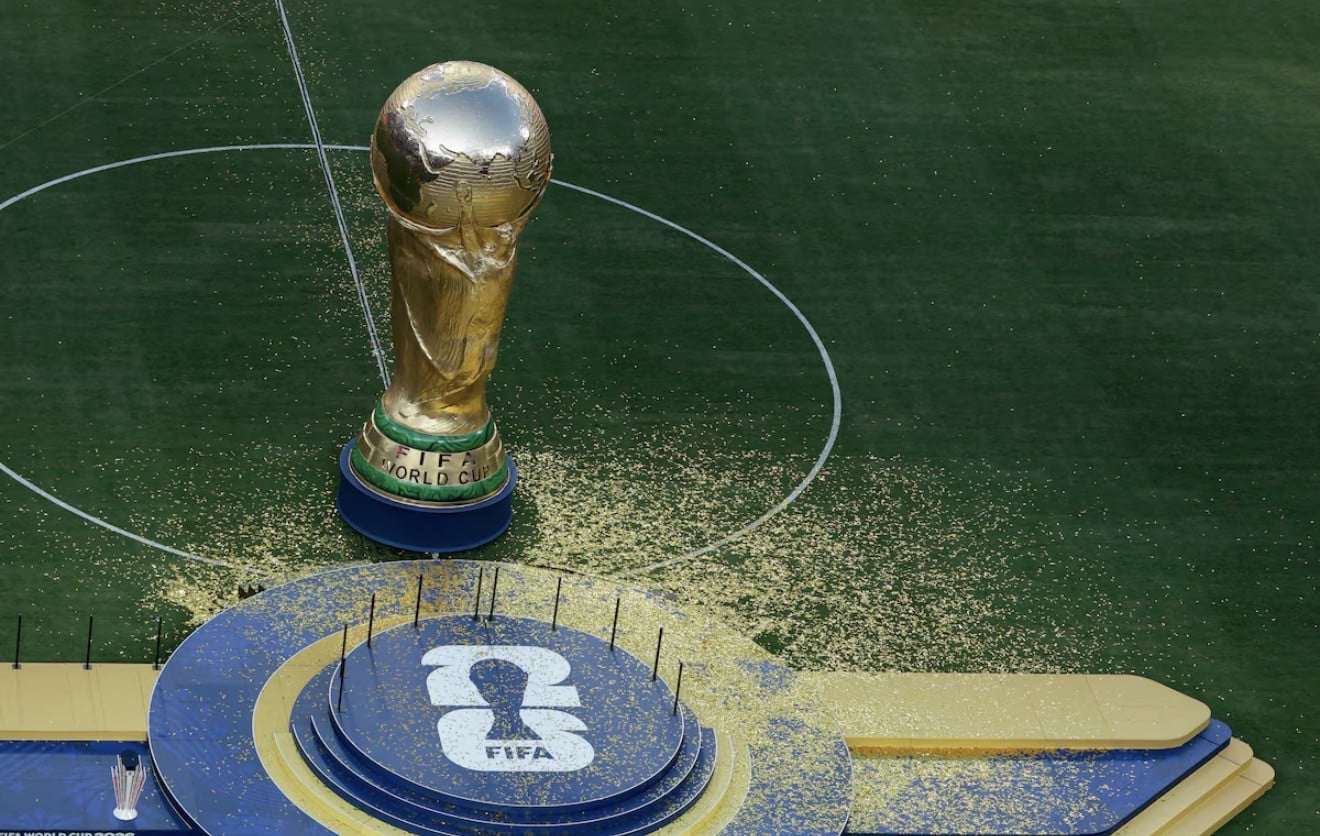
ISLAMABAD: FIFA president Gianni Infantino has revived discussion over whether the World Cup could eventually expand to 64 teams, a move that could significantly reshape both the tournament and the sport’s financial structure.
Infantino told Swiss television during the tournament that a 64-team competition was among the ideas that could be considered once the finals had concluded. The proposal has reopened questions about how far football’s biggest event can grow in practical and commercial terms.
Infantino argued that broader participation would serve the global game by giving more countries a route to the sport’s biggest stage. He said:
“I think it is important that when you want to organise a World Cup, you do it for the whole world — not just Europe and South America. If you don’t give smaller countries a chance to participate in the World Cup, they’ll lack the incentive to keep improving.”
But resistance remains among senior football officials. UEFA president Aleksander Ceferin said last year that he opposed the idea, and the European body’s position has not changed. Asian Football Confederation president Sheikh Salman bin Ibrahim Al Khalifa has also spoken against more expansion.
"I don’t think it’s a good idea for the World Cup itself, and it’s not a good idea for our qualifiers either. So I’m not supporting that idea,"
FIFA did not respond to a request for comment.
Commercial and organisational impact
A larger finals tournament could lessen the importance of qualifying campaigns by making entry easier for more major football nations. If broadcasters begin valuing qualifiers less, the six regional confederations could become more reliant on money distributed by FIFA, potentially concentrating greater financial influence within the world governing body.
The 2026 World Cup in Canada, Mexico and the United States was the first since 1998 to move beyond the 32-team structure, featuring 48 teams and 104 matches over more than five weeks. If a 64-team event kept the same overall format of four-team groups followed by a 32-team knockout round, the total number of games would rise to 128. That would be 24 more than in 2026 and twice the number played under the previous 32-team model.
Unless FIFA shortens the calendar or stages more matches at the same time, such an expansion could add around another week to an event that already runs for more than five weeks. The logistical demands would also grow, requiring additional stadiums, hotels, transport systems, training facilities and volunteers.
Pressure on future hosts and domestic calendars
Plans currently call for Spain, Portugal and Morocco to host most of the 2030 World Cup, while Uruguay, Argentina and Paraguay are each set to stage one opening-round match to mark the tournament’s centenary. Fitting 64 teams across six host countries would be a major administrative test, while staging such an event in a single nation could be harder still.
Saudi Arabia, which is due to host the 2034 tournament on its own, already faces calendar complications. Ramadan is expected to begin in mid-November that year, making it difficult to repeat the November-December scheduling used for the 2022 World Cup in Qatar and potentially forcing another major adjustment to football’s international calendar. A 64-team tournament would intensify those pressures, especially as Saudi Arabia is still developing its tourism infrastructure.
For the current 48-team model, Saudi Arabia has proposed 15 venues, including eight stadiums in Riyadh, four in Jeddah, and others in Khobar, Neom and Abha. Construction and renovation work is already under way ahead of the 2027 Asian Cup.
A larger World Cup would add to concerns about fixture congestion and its effect on domestic leagues. Many competitions now follow Europe’s August-to-May season, including Japan’s J-League, which is about to begin its first campaign on that schedule, while Major League Soccer in the United States plans a similar shift from next year. That means any future winter World Cup would disrupt a wider range of leagues than it did in 2022.
Financial and player welfare concerns
National federations could also face greater costs. Even France had expected to spend 24.5 million euros ($28 million) at this year’s World Cup, with French Football Federation president Philippe Diallo saying Les Bleus would likely need to reach at least the semi-finals to avoid losing money. At the FIFA Congress in Vancouver in April, Diallo said FIFA should provide more financial support to competing teams.
If the 48-team format is already testing the budgets of participating associations, a longer 64-team tournament could increase those burdens. It would also sharpen player welfare concerns, as more matches would further increase the workload of top-level footballers.
A 64-team World Cup could widen access to the competition for more countries, but it could also renew arguments over competitive balance, the overall length of the event, the cost to supporters and whether further expansion would weaken the exclusivity that has long been central to the tournament’s appeal.
Comments
No comments yet. Be the first to join the discussion!


