CM Maryam orders price control, sanitation overhaul with strict deadlines
Punjab CM Maryam Nawaz directs PERA to regulate LPG prices and sets a two-week cleanliness deadline. She orders 24-hour transport fare reports, strict action on hoarding, and AI monitoring under “Suthra Punjab.”

-
Punjab CM tasks PERA with regulating LPG prices across Punjab with stern action
-
Sets two-week deadline to fix cleanliness with seeking report on transport fares within 24 hours
-
Says free transport plan under review for 17 underserved districts
LAHORE: Punjab Chief Minister Maryam Nawaz on Monday issued a series of directives aimed at controlling prices, improving sanitation, and enhancing public service delivery across the province, setting strict deadlines and warning of accountability over lapses.
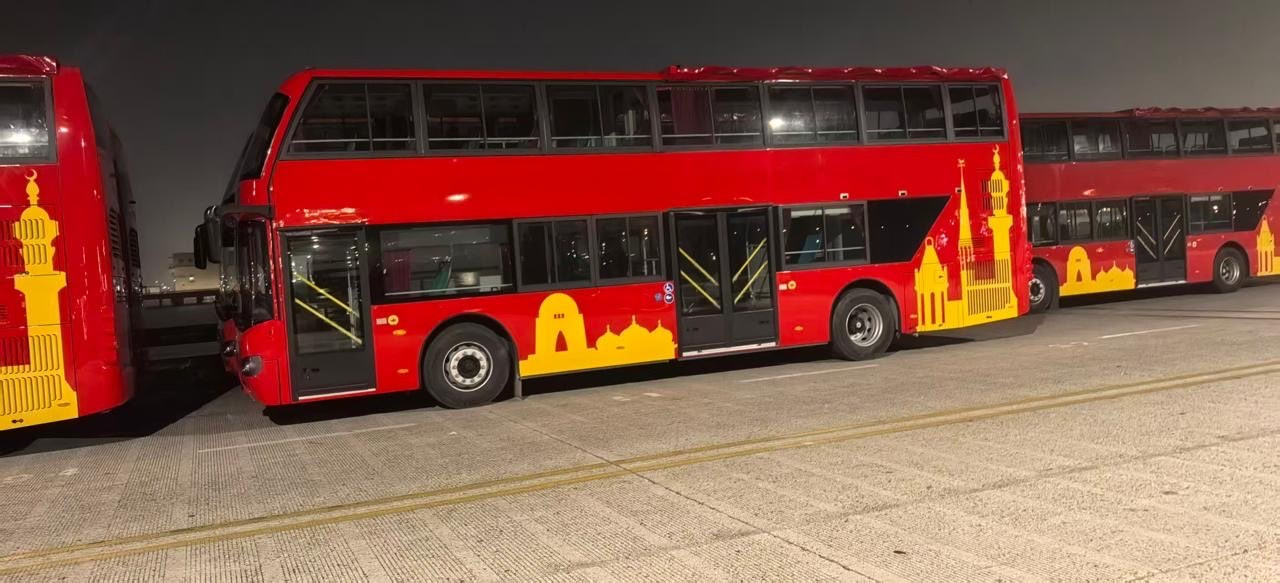
Chairing a high-level meeting, the chief minister directed the relevant authority (PERA) to regulate LPG prices across Punjab and set a two-week deadline to improve the cleanliness situation. She also sought a report within 24 hours to determine transport fares per kilometre and asked officials to consider launching free transport in 17 districts where no public transport facility currently exists.
The meeting reviewed the impact of global oil prices on transport fares, while a detailed report on prices of 23 essential food items — including onions, tomatoes, potatoes, bananas, and pulses — was presented from across districts, including Lahore.
Officials informed the meeting that flour prices in Punjab remain significantly lower than other provinces — by Rs427 compared to Sindh, Rs823 compared to Khyber Pakhtunkhwa, and Rs790 compared to Balochistan. It was also noted that pulses, fruits, and vegetables are relatively cheaper in the province, with sufficient stocks of lentils and gram available.
The chief minister urged citizens to avoid purchasing items sold above officially notified rates and ordered strict action against hoarding of essential commodities.
Emphasising administrative vigilance, she directed assistant commissioners to conduct surveys of ponds and water bodies in every street, while commissioners were instructed to submit daily reports along with photographs. Safety measures for ponds in every union council were also ordered.
Highlighting key governance priorities, the CM stressed focus on tree plantation, dog-bite prevention, zebra crossings, street lighting, green belts, and other performance indicators. She also ordered the revival of the cleanliness drive in graveyards under the “Suthra Punjab” programme.
Expressing displeasure over poor sanitation in Jhang, she ordered complete cleaning of selected union councils within 24 hours, terming the presence of garbage heaps in cities as “unacceptable.”
A detailed review of beautification and upgradation projects across districts was also conducted through photographic inspections. The chief minister directed that all such projects be completed by June, with strict emphasis on maintaining quality thereafter.
Projects in cities including Attock, Rahim Yar Khan, and Faisalabad were reviewed. She appreciated the quality of work in Attock and commended the deputy commissioner, while also praising improvements around the Clock Tower area in Faisalabad, particularly the resolution of roadside drainage issues and removal of overhead electric wiring.
The chief minister expressed serious concern over deaths caused by open drainage systems, warning that the presence of unsafe ponds would be treated as administrative failure.
The meeting also reviewed targets under the “Suthra Punjab” programme in detail. It was decided to introduce AI-based monitoring systems, including digital mapping for real-time tracking of sanitation workers in every union council.
A new AI-based complaint system, “Suthra Punjab Hero,” will be launched, along with a pilot project for AI-based waste detection vehicles. The CM directed further improvements in sanitation, reiterating that visible garbage heaps in cities would not be tolerated.
World Health Day message
In a related development, Chief Minister Maryam Nawaz reaffirmed her commitment to providing quality healthcare facilities across the province on the occasion of World Health Day.
She stressed the importance of awareness regarding balanced nutrition, exercise, and disease prevention, urging citizens to take care of both physical and mental health.
In her message, the chief minister said comprehensive health reforms were being implemented under the vision of a “Sehatmand Punjab,” adding: “Health is the greatest wealth—protect it and lay the foundation for a healthy future.”
She said a healthy population was essential for a prosperous and developed society and reiterated that every citizen has the right to quality healthcare.
Highlighting ongoing initiatives, she said the Nawaz Sharif Institute of Cancer Treatment and Research Center and the Jinnah Institute of Cardiology in Lahore were in their final stages of completion.
She added that thousands of successful procedures had been conducted under Stroke Management Centers, the Children’s Heart Surgery Program, and the Transplant Program, while millions of patients suffering from cardiac diseases, hepatitis, tuberculosis, and diabetes were receiving free medicines at their doorstep.
To expand outreach, 50,000 Community Health Inspectors — mostly women — have been recruited on a monthly stipend of Rs50,000.
For the first time, a health profile for every household is being developed, with patient histories being recorded in a centralised data system.
She also noted that an air ambulance service had been launched to ensure timely transfer of patients from remote areas in emergencies.
The government is importing modern Chinese medical equipment to upgrade hospitals, while expensive cancer treatment is being provided free of cost at Mayo Hospital through ablation machines.
She further said that free medicines worth Rs100 billion were being provided in government hospitals across Punjab.
Under the “Clinic on Wheels” programme, more than 16.9 million patients have benefited so far, with over 1,000 mobile clinic vehicles delivering free medical services to an average of more than 45,000 people daily across the province.
Comments
No comments yet. Be the first to join the discussion!