CPJ warns of self-censorship risk after Tarar's 'red lines' warning to journalists
The CPJ warns that legal threats from Minister Tarar could lead to self-censorship among journalists in Pakistan, undermining press freedom and critical reporting.

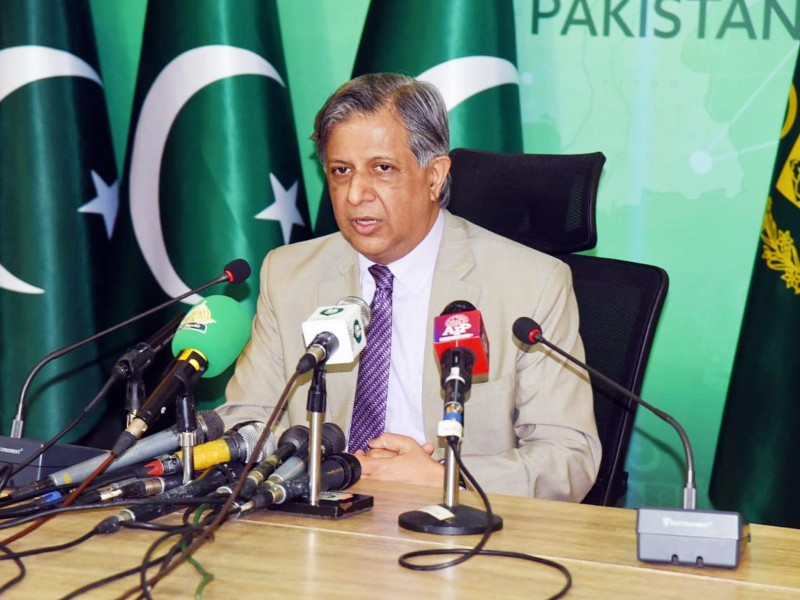
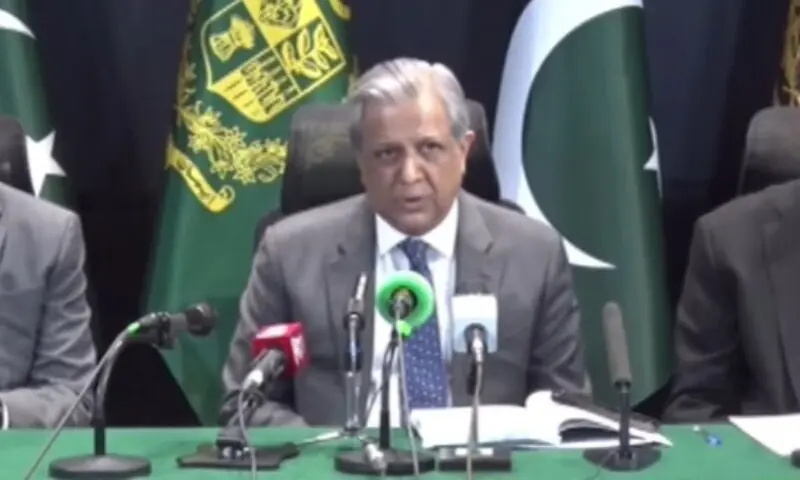
ISLAMABAD: The Committee to Protect Journalists (CPJ) on Thursday expressed concern over remarks by Law Minister Azam Nazeer Tarar warning journalists and commentators of possible legal action if they crossed “red lines” while discussing Pakistan’s foreign policy amid escalating tensions in the Middle East.
Beh Lih Yi, CPJ’s Asia-Pacific regional director, voiced alarm over the minister’s statement in a post on X, saying the warning could discourage critical reporting. “We are alarmed by Minister Azam Nazeer Tarar's warning that Pakistani journalists and commentators could face legal action for critical coverage of foreign policy,” she said.
The media watchdog stressed that independent analysis and reporting on international affairs were essential for helping the public understand how global developments affect domestic issues. Yi warned that such threats could encourage self-censorship among journalists and ultimately undermine the public’s right to information.
“Pakistani authorities must make clear they will not use broadly framed legal threats or political pressure to silence critical reporting on foreign policy,” she added, urging the government to ensure that no journalist was targeted for carrying out their professional duties.
The CPJ, an independent nonprofit organisation that advocates for press freedom worldwide, said journalists must be able to report safely and without fear of reprisal.
The statement came a day after Tarar urged media organisations and online commentators to exercise caution when discussing Pakistan’s foreign policy, noting that certain analyses had created “unease” among friendly countries.
The minister said commentary originating from Pakistan had prompted diplomatic queries from abroad regarding whether such views reflected official policy or personal opinion.
Referring to Article 19 of the Constitution, which guarantees freedom of expression, Tarar said the right must still remain within constitutional limits. He cautioned against speculative commentary about Pakistan’s relations with regional countries, particularly in the context of tensions involving Iran and Gulf states.
Tarar also warned that sensational commentary aimed at attracting online views could damage Pakistan’s interests. “Creating sensationalism to gain views is harmful. In the current situation, spreading sensationalism is not a service to the country,” he said, adding that authorities could act if the defined “red lines” were crossed.
Although the minister did not name any individuals, the warning came as several vloggers and online commentators have been discussing the evolving regional conflict and raising questions about Pakistan’s foreign policy stance.
The debate comes amid rising tensions in the Middle East following joint US-Israeli strikes on Iran. Pakistan has reiterated its strong strategic commitment to Saudi Arabia while calling for restraint and dialogue to prevent a broader regional conflict.
Prime Minister Shehbaz Sharif recently discussed the situation with Iranian President Masoud Pezeshkian during a telephone conversation, emphasising the importance of diplomacy to ensure peace and stability in the region.
Meanwhile, the prime minister’s spokesperson for foreign media, Mosharraf Zaidi, said Pakistan would firmly stand with Saudi Arabia if required, underscoring the depth of ties between the two countries.
The regional escalation has intensified after Iran launched waves of drone and missile strikes targeting Israel as well as Gulf states hosting US military installations, including Saudi Arabia. The conflict has disrupted key infrastructure across the Gulf and affected global energy supplies through the Strait of Hormuz, a critical route for around one-fifth of the world’s oil and liquefied natural gas shipments.
Airspace closures across the region have also forced airlines to cancel roughly 40,000 flights, marking the largest disruption to global air travel since the COVID-19 pandemic.
Comments
No comments yet. Be the first to join the discussion!