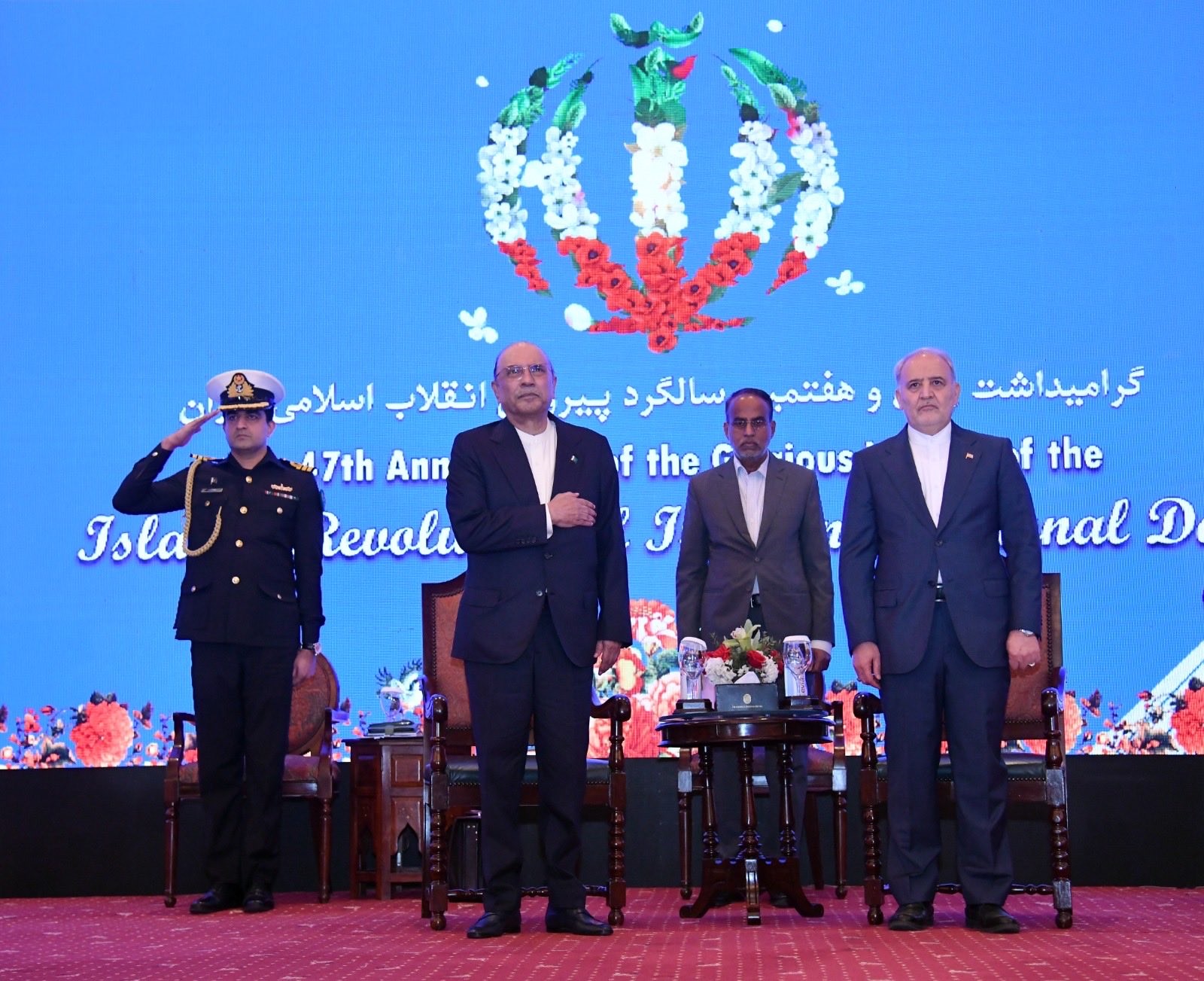
Zardari vows 'decisive response' to cross-border threats, urges India to choose dialogue over war
In a recent address, President Zardari vowed a decisive response to cross-border threats, emphasizing dialogue over conflict while addressing opposition disruptions.

-- Amid opposition uproar, President says Pakistan ready to defeat any aggressor
-- Blames Afghan soil for harbouring TTP, BLA; says tolerance for proxy attacks has ended
-- Slams India’s suspension of Indus Waters Treaty as 'weaponization of water’
-- Calls for inclusive economic growth, energy reform and equitable NFC awards
ISLAMABAD: President Asif Ali Zardari on Monday delivered his ninth address to a joint sitting of Parliament, vowing that Pakistan would not allow “any entity, domestic or foreign, to use neighbouring territory to destabilise our peace,” as opposition lawmakers disrupted proceedings with loud sloganeering.
Chants of “Go, Zardari, go” and demands to release Imran Khan echoed through the House, with members gathering before the speaker’s dais during the speech.
Calling it a “singular privilege” to address Parliament at the start of the new parliamentary year, the president said the continuity of democratic practice reflected the resilience of Pakistan’s constitutional order. He recalled returning presidential powers to Parliament through the 18th Amendment in line with the Constitution of Pakistan, saying the presidency today stands as “a symbol of unity and guardian of constitutional law.”
Describing the past ten months as a period of profound tests, Zardari said Pakistan responded with “strategic restraint and firm resolve” when its sovereignty was challenged on both eastern and western borders.
Referring to Marka-i-Haq, he termed it a turning point defined by a “resounding military victory,” asserting that any future aggression would be met with a humiliating defeat. “Move away from warfare to meaningful negotiation. That is the only path for regional security,” he said, while stressing that Pakistan is a responsible nuclear state aware of its obligations.
He accused India of amplifying proxy operations through Afghanistan and warned that Pakistan had demonstrated only a “fraction” of its capabilities under Article 51 of the UN Charter. He specifically named the Tehreek-i-Taliban Pakistan (TTP) and the Balochistan Liberation Army (BLA) as Indian-sponsored groups operating from Afghan territory.
Citing a recent report by the United Nations Security Council monitoring team, Zardari said terrorist groups based in Afghanistan posed an extra-regional threat and warned that ignoring the issue could lead to catastrophic consequences elsewhere.
“All promises made in Doha have been conveniently forgotten,” he remarked, urging the Afghan Taliban regime to dismantle terror networks and choose peace for its people.
Turning to global affairs, Zardari expressed deep concern over instability in the Middle East, condemning what he described as war being waged on Iran during negotiations and reaffirming support for Iran’s sovereignty. At the same time, he criticised retaliatory attacks on Gulf nations and urged all sides to exercise restraint and respect international law.
In one of the strongest portions of his speech, the president accused India of engaging in “water aggression” by placing the Indus Waters Treaty in abeyance.
“This is plain and simple hydro-terrorism — a weaponisation of vital water flows to exert political leverage,” he said, warning that unilateral disruption of transboundary water agreements threatens regional stability and violates international norms.
“We will defend our water rights with unity, resolve, strength and legal clarity,” he declared.
On domestic governance, Zardari stressed that provincial autonomy strengthens the federation and called for effective functioning of constitutional forums, including the Council of Common Interests. He expressed hope for a just National Finance Commission Award to ensure equitable distribution of resources.
Highlighting Balochistan’s historic deprivation, he pledged both security measures against insurgents and socio-economic initiatives to ensure locals benefit from mineral wealth and the blue economy.
On the economy, he said Pakistan had moved back from the brink of collapse in 2022 but must now shift toward inclusive growth, job creation and household relief. He emphasised tax transparency, energy reform, climate-resilient agriculture and technological advancement as pillars of sustained recovery.
“Security, economy and constitutional governance are interconnected pillars,” he said. “Weakness in one undermines the others.”
Prime Minister Shehbaz Sharif, PPP Chairman Bilawal Bhutto-Zardari, Punjab Chief Minister Maryam Nawaz and other senior leaders were present during the address, which unfolded amid visible political tensions inside the House.
The writer is Head of News at Pakistan Today. He has a special focus on current affairs, regional and global connectivity, and counterterrorism. He tweets as @mian_abrar and also can be reached at [email protected]
View all articles →Comments
No comments yet. Be the first to join the discussion!