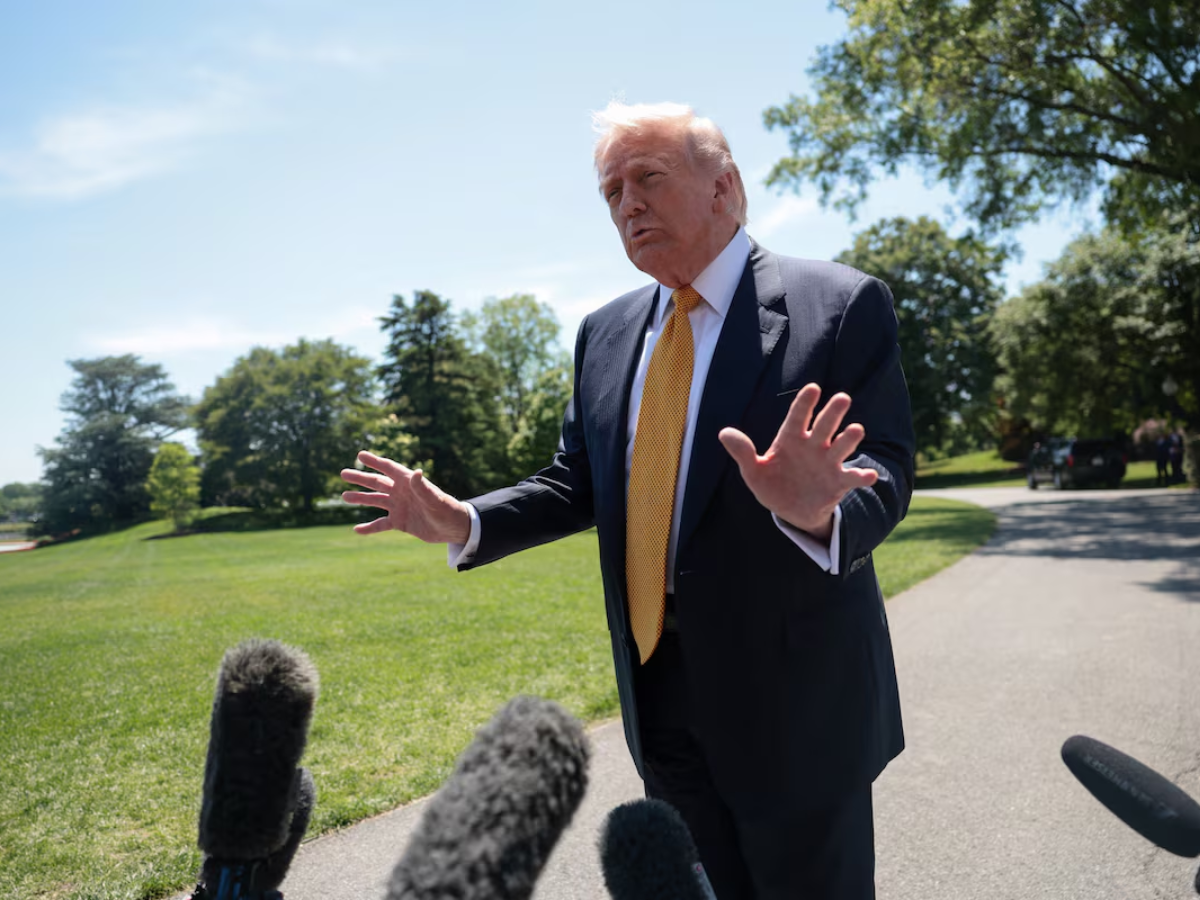
Trump signals openness to diplomacy in standoff with Iran
In his State of the Union address, Trump expressed a preference for diplomacy over military action in addressing tensions with Iran, despite concerns over missile development and nuclear ambitions.

WASHINGTON: US President Donald Trump said the United States would prefer a diplomatic resolution to tensions with Iran, despite concerns over Tehran’s missile development and nuclear ambitions.
Speaking during his State of the Union address, Trump claimed that Iran is working on long-range missile technology that could eventually reach the United States. “They've already developed missiles that can threaten Europe and our bases overseas, and they're working to build missiles that will soon reach the United States of America,” he said.
In 2025, the US Defense Intelligence Agency assessed that Iran could potentially develop a militarily viable intercontinental ballistic missile by 2035 if it chose to pursue that capability, though it did not conclude that Tehran had made such a decision.
According to the Congressional Research Service, Iran currently maintains short- and medium-range ballistic missiles with ranges of up to around 1,850 miles (3,000 kilometers). The continental United States lies more than 6,000 miles from Iran’s western border.
Washington and Tehran have held two rounds of negotiations aimed at reaching a new agreement on Iran’s nuclear program to replace the 2015 deal that Trump withdrew from during his first term. The United States has called for zero uranium enrichment by Iran and has also sought to address its ballistic missile activities and support for armed groups in the region — demands that Tehran has rejected.
Trump has reinforced the US military presence in the Middle East, deploying two aircraft carriers, additional naval vessels, and a significant number of aircraft and other assets. He has repeatedly warned that military action remains an option if talks fail.
While reaffirming his preference for diplomacy, Trump stressed that he would not allow Iran to acquire nuclear weapons. “We are in negotiations with them, they want to make a deal but we haven't heard those secret words: ‘We will never have a nuclear weapon,’” he said. He added that preventing Tehran from obtaining nuclear arms remains a non-negotiable priority.
In his address, Trump also criticized the Supreme Court of the United States for striking down his global tariff measures. Calling the ruling “very unfortunate,” he made the remarks in the presence of Chief Justice John Roberts and Justice Amy Coney Barrett, both conservatives, as well as Justice Elena Kagan, who joined the majority decision against key elements of his tariff policy.
Shortly after the ruling, Trump imposed a new 10 percent duty under separate legal authority, which took effect Tuesday. He has indicated the rate could be raised to 15 percent. Although the tariffs are set to remain in place for 150 days unless extended by Congress, Trump maintained they would ultimately result in a stronger trade framework.
Comments
No comments yet. Be the first to join the discussion!