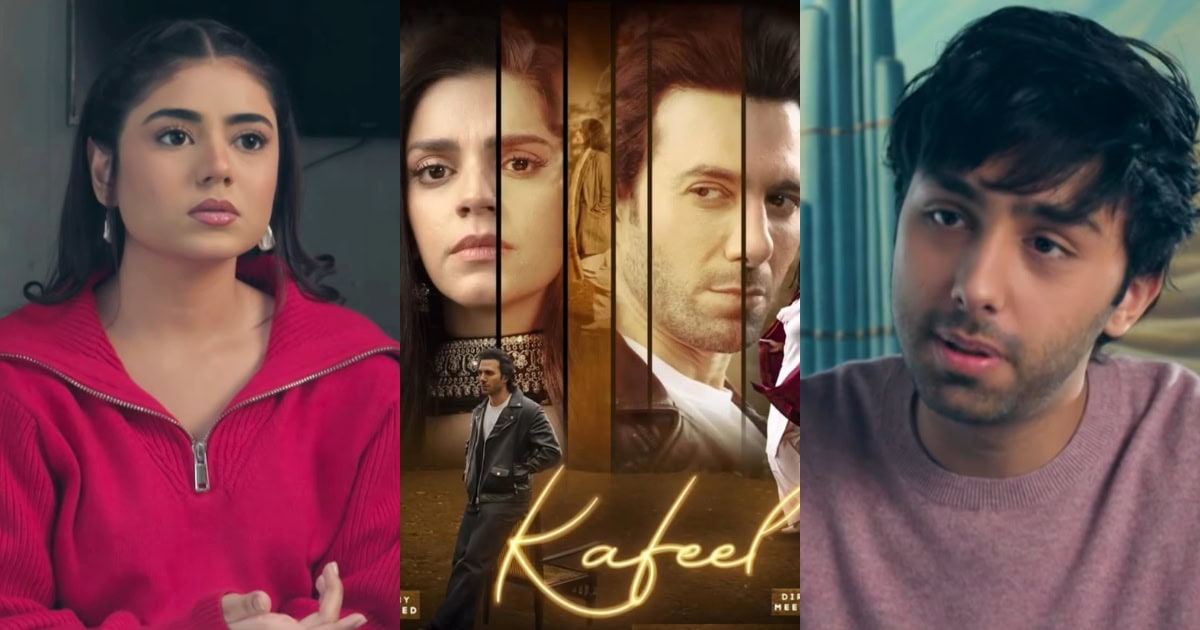
Ary Digital's Kafeel: A hit drama hindered by shaky camera shots
Written by Umaira Ahmed, captivates with strong performances but falters due to distracting shaky camera work that detracts from emotional depth.

ARY Digital promoted Kafeel as one of its major prime-time offerings — a drama expected to carry emotional depth, social commentary, and cinematic polish. The title alone suggested intensity. And when audiences learned that the script came from Umaira Ahmed — one of Pakistan’s most respected television writers — anticipation naturally rose.
Yet what unfolded on screen left viewers puzzled.
A Story Undermined by Its Own Camera
From the opening episode, something felt visually unstable. Close-ups trembled. Mid-shots drifted. Conversations that demanded stillness were filmed with a wandering lens. Initially, audiences assumed it was a one-off technical error. Perhaps a rushed edit. Perhaps a post-production glitch.
But the pattern continued.
Each episode carried the same restless camera movement — handheld shots without clear motivation, abrupt zooms, uneven framing, and edits that cut away too quickly during emotional peaks. Instead of enhancing tension, the camera distracted from it.
The problem wasn’t merely movement — it was lack of control. In professional cinematography, handheld work is often deliberate, used to create intimacy or psychological tension. Here, the movement appeared constant rather than purposeful. Scenes that required calm visual grounding felt visually anxious.
The Director’s Vision — or Oversight?
The director, known within industry circles for experimenting with realism and naturalistic performances, seemed to aim for raw intensity. In theory, a slightly mobile camera can create immediacy. But execution determines impact.
In Kafeel, viewers struggled to distinguish between stylistic choice and technical inconsistency. Dramatic confrontations were filmed as though urgency demanded instability, yet even quiet domestic scenes carried the same jitter. The visual grammar never settled.
This raises questions about creative checks and balances. Was the director intentionally pursuing a cinéma vérité aesthetic? If so, why was it not refined in post-production? Was there insufficient stabilization? Or did the production timeline leave little room for careful correction?
The Producers and Quality Control
With an experienced production house backing the project, expectations of technical precision were high. Producers typically oversee not just budgets and schedules, but final output quality. Major networks like ARY rarely allow inconsistent visual standards to pass unnoticed.
Yet episode after episode aired with similar complaints circulating online. Viewers began openly questioning how internal screenings did not flag the persistent shakiness and uneven edits.
Television production in Pakistan often operates under tight timelines. Rapid shooting schedules, limited retakes, and compressed editing windows can lead to compromises. Still, when a project carries a high-profile writer’s name and a prime slot, audiences expect polish.
The Cast: Strong Performances in Unsteady Frames
Ironically, the actors delivered compelling performances. Emotional scenes were layered and nuanced. Subtle expressions — a trembling lip, a silent tear, a shifting glance — were often present.
But the unstable framing sometimes diminished their impact. Close-ups meant to capture vulnerability felt visually unsettled. Moments that needed stillness to breathe were interrupted by unnecessary camera drift.
It became clear that the issue was not performance. It was presentation.
Audience Reaction: Confusion, Then Frustration
At first, viewers were patient. A few even speculated that the shaky aesthetic symbolized the emotional chaos within the story. But as the pattern continued, frustration replaced curiosity.
On larger screens, the jitteriness became even more noticeable. What might pass on a small mobile device felt exaggerated on television. Scenes that should have drawn viewers deeper instead made some physically uncomfortable.
And that is perhaps the core issue: visual discomfort without narrative justification.
A Case of Lost Potential
Kafeel had all the right elements:
A celebrated writer
A capable director
A respected network platform
A committed cast
A production team with experience
Yet the drama risks being remembered less for its storytelling and more for its unstable camerawork.
In the end, television is a collaborative art. When one department falters — especially cinematography and editing — the entire experience shifts. Even the strongest script can struggle when the visual foundation feels shaky.
Whether this was a bold stylistic experiment that misfired, or a byproduct of rushed production, one thing is certain:
Viewers noticed.
And when audiences notice the camera more than the story, something in the storytelling chain has slipped.
Manal Jaffery is a news editor at Pakistan Today with extensive experience in journalism, reporting, newsroom editing and digital content production. Her work covers national and international news, with a focus on accuracy, clarity and timely reporting.
View all articles →Comments
No comments yet. Be the first to join the discussion!