Why Karachi keeps burning?
Karachi's ongoing cycle of devastating fires, exemplified by the Gul Plaza tragedy, highlights systemic failures in safety regulations and enforcement. With over 2,500 incidents in recent years, urgent reform is needed to prevent future disasters.

For decades, Karachi has carried Pakistan’s economy on its back. Its ports move the bulk of the country’s trade, its factories anchor key export sectors, and its markets sustain millions of livelihoods. Yet alongside this contribution runs another, less acknowledged record: a steady accumulation of loss. Fires, collapses and floods have become recurring features of urban life in the country’s largest city, destroying businesses and lives in incidents that are routinely described as tragic, but rarely treated as preventable.
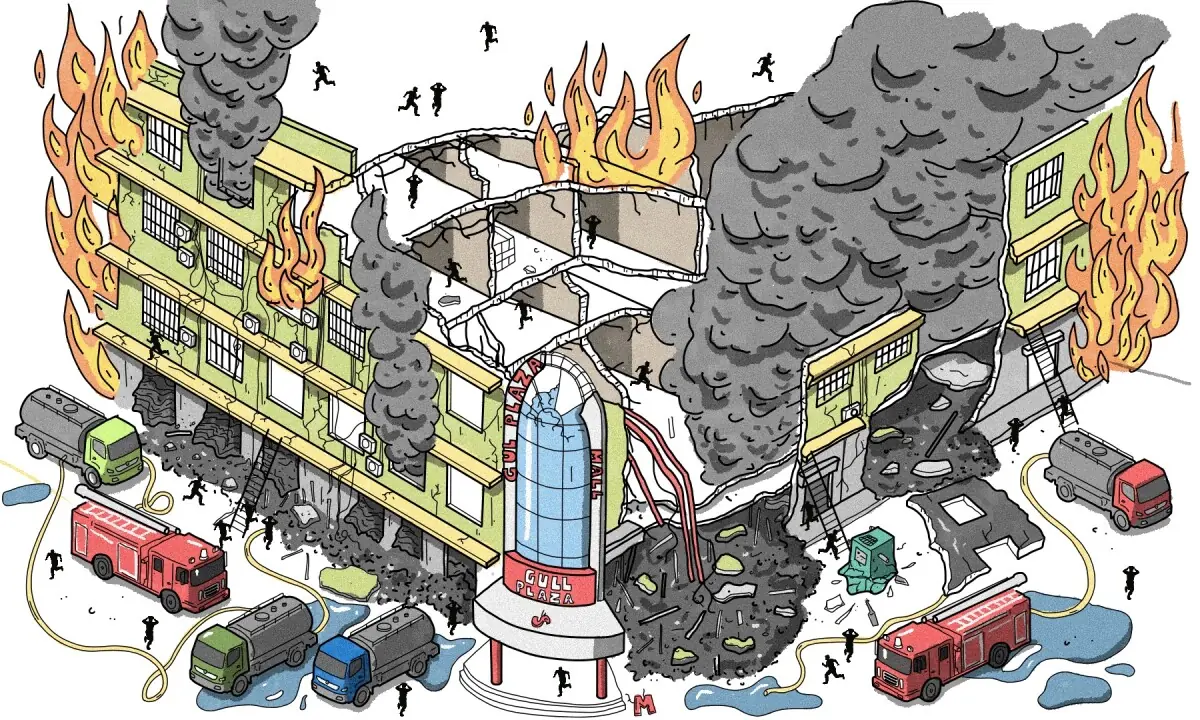
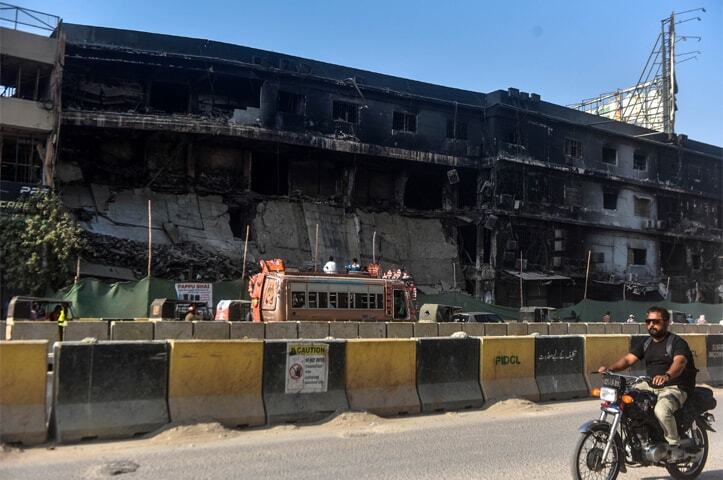
The deadly fire at Gul Plaza in Saddar on 17th January fits this pattern with unsettling precision. At least 23 people were killed, dozens were reported missing, and one of Karachi’s busiest commercial centres was reduced to ash. Officials promised inquiries and compensation, as they have before. For residents of the city, however, the scene felt familiar: smoke over a central market, blocked roads, exhausted firefighters and a rescue operation stretched across days. Gul Plaza was not an exception. It was confirmation of a system that fails repeatedly.
Nor was Gul Plaza the first such incident. Karachi has endured this cycle before. We have seen this pattern of destruction in Karachi before. The Baldia factory fire in 2012 killed more than 250 workers. In the years since, warehouses, shopping centres and residential buildings have burned with alarming regularity. In 2023 and 2024 alone, the city recorded more than 2,500 fire incidents. Each time, the explanations sound the same: faulty wiring, illegal extensions, flammable materials. These causes are real, but they leave the central question untouched. Why do such incidents keep escalating into large-scale disasters?
Gul Plaza offers part of the answer. Located on MA Jinnah Road, the building was not among the worst designed commercial structures in Karachi. It had multiple entry and exit points and was well known in a central business district. Yet once the fire broke out, poor ventilation, combustible inventory and the absence of effective fire suppression systems allowed it to spread rapidly. Firefighters struggled to reach the site through narrow, congested streets. Water supply was inconsistent. Sections of the building collapsed, slowing rescue efforts. None of this was unforeseeable.
The deeper problem lies not in the absence of regulation, but in how regulation functions. Karachi does not lack building codes or safety laws. What it lacks is consistent enforcement. Inspections are irregular, penalties are weak, and compliance is often negotiable. Over time, this has created an urban environment where safety is treated as an optional expense rather than a non-negotiable standard. It is cheaper to ignore regulations than to follow them, and experience suggests that accountability rarely follows disaster.
Whether Gul Plaza becomes another footnote or a turning point depends less on promised inquiries than on political will. Karachi will burn again if current patterns persist. The question is whether this fire will be treated, once more, as an isolated tragedy or finally recognised as evidence of a system that has normalised preventable disaster.
This dynamic is reinforced by the city’s political economy. Many commercial buildings operate in legal grey zones sustained through informal arrangements, selective enforcement and political patronage. When violations are widespread, responsibility becomes diffuse. After a fire, blame is distributed across departments, agencies and decades of neglect until it effectively disappears. Committees are formed, reports are prepared, and public attention moves on. The system absorbs tragedy without reform.
The cost of this extends beyond the immediate loss of life and property. Markets like Gul Plaza are economic ecosystems, not just rows of shops. Most traders are small business owners who invest life savings into modest enterprises. When fire destroys their stock, records and premises, there is rarely insurance to soften the blow. The result is long term debt, unemployment and downward social mobility.
At a city wide level, repeated destruction undermines investor confidence and pushes economic activity further into informality, reinforcing the very conditions that make disasters more likely. There is also a broader strategic consequence. Urban risk is often treated as a municipal issue, separate from national economic planning. In reality, a city that cannot protect its markets cannot claim to protect its economy. Karachi’s instability disrupts supply chains, weakens trade confidence and erodes trust in state capacity. A city that burns regularly is not merely mismanaged; it is structurally vulnerable.
What makes Gul Plaza particularly troubling is not that it revealed unknown problems, but that it demonstrated how little has changed. Karachi, a city of over 20 million people, is served by just 35 fire stations, with limited modern equipment and specialised training. Narrow roads, unplanned growth and ageing infrastructure continue to obstruct emergency response. These are not technical challenges without solutions; they are the result of policy choices that have consistently placed urban safety low on the list of priorities.
Preventing such disasters does not require grand visions or megaprojects. It requires altering incentives. Safety inspections must be mandatory and publicly disclosed. Violations must carry real financial and legal consequences. Responsibility must extend beyond junior officials to those who have benefited from unsafe construction and operation over decades. Most importantly, compliance must become cheaper than corruption.
Whether Gul Plaza becomes another footnote or a turning point depends less on promised inquiries than on political will. Karachi will burn again if current patterns persist. The question is whether this fire will be treated, once more, as an isolated tragedy or finally recognised as evidence of a system that has normalised preventable disaster.

Comments
No comments yet. Be the first to join the discussion!