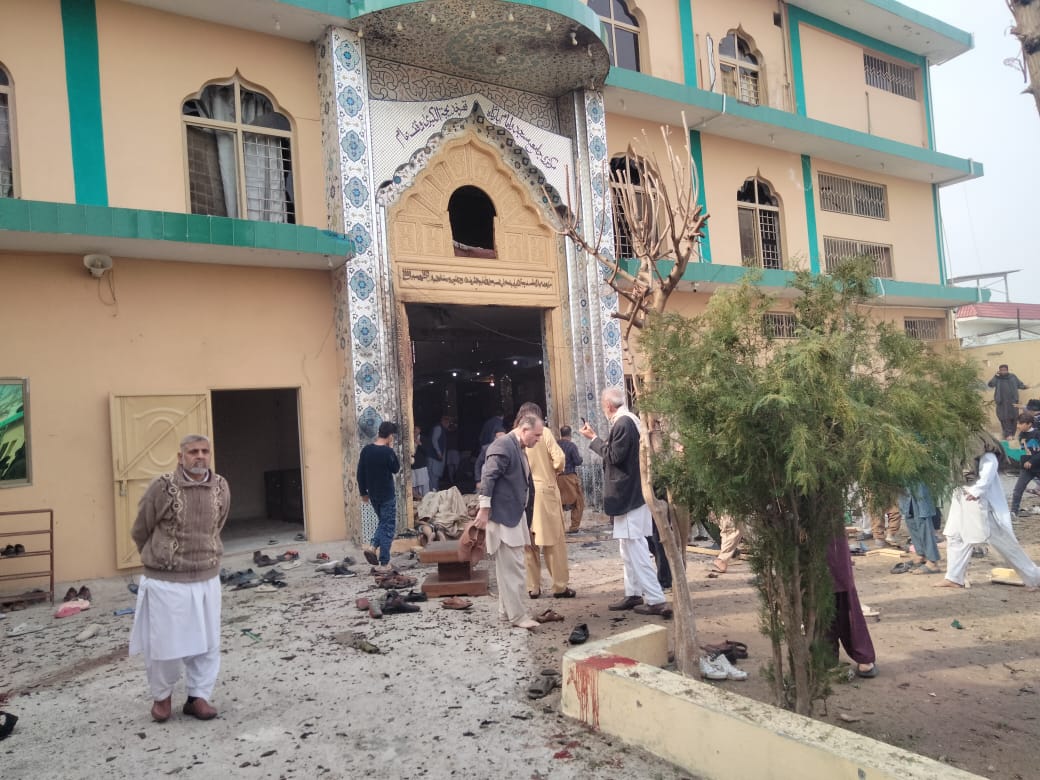
31 killed, 169 injured in Islamabad suicide attack during Friday prayers; state vows full force response
A devastating suicide attack during Friday prayers at an Islamabad mosque has left 31 dead and 169 injured. Authorities identify the bomber and vow a strong response.
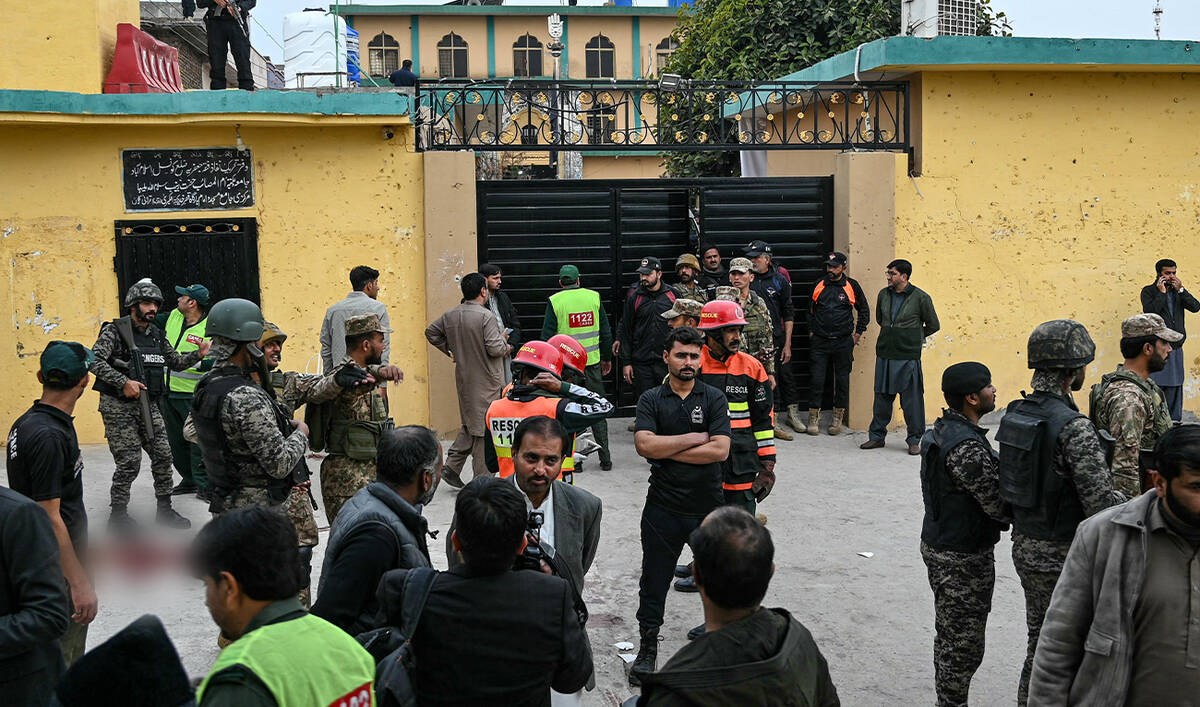
- Suicide bomber strikes Tarlai Imambargah during Friday prayers, leaving devastation in its wake
- Defence Minister points to India-Afghanistan nexus behind attack, saying state will respond to cruelty with full force
- Authorities claim suicide bomber identified who had got training in Afghanistan and had confirm multiple cross-border trips
- Govt reaffirms National Action Plan commitment to eradicate extremist networks
- PM, President, KP, Punjab and Sindh condemn attack, pledge swift justice
- Punjab cancels Basant events in Lahore, calls for national unity in fight against terrorism
ISLAMABAD: At least 31 worshippers were killed and 169 others injured when a suicide bomber attacked Imambargah Khadijahtul Kubra in the Tarlai area on the outskirts of Islamabad during Friday prayers with the authorities claimed to have identified the attacker who had received training in Afghanistan, while Defence Minister Khawaja Asif suggested the involvement of India and Afghanistan in orchestrating the attack.
Senior government officials said, “At least 31 worshippers were killed and 169 injured in a suicide bombing at a mosque on the outskirts of the capital.” The Islamabad district administration confirmed the fatalities, noting that the blast occurred around midday, coinciding with Friday prayers.
Police officials confirmed the explosion took place at the Imambargah, emphasizing that the blast struck during prayers, a time when the congregation was largest. This attack comes amid a renewed surge in militant violence across Pakistan, following a suicide bombing outside a district court in Islamabad last November that killed 12 people and wounded dozens, underscoring persistent security concerns in even highly guarded urban centers.
Investigation and Suspect Identification
“The identity of the suicide bomber has been confirmed,” a senior government official said on condition of anonymity. “Verified information indicates that the attacker received training for terrorist activities in Afghanistan and had traveled there multiple times before returning to Pakistan last year.”
Defence Minister Khawaja Asif elaborated in a statement on social media platform X, asserting that the attack reflected collusion between India and Afghanistan. He noted, “It has been proved that the terrorist involved in the attack travelled to and from Afghanistan. The collusion between India and Afghanistan is being revealed.”
According to the minister, security personnel at the site had confronted the attacker, who then opened fire before detonating explosives while standing in the last row of worshippers. “The state will respond to this cruelty with full force,” he added, warning that India was attempting to destabilize Pakistan through proxy actors following setbacks in direct confrontations.
Pattern of Terrorism and Forensic Insights
Minister of State for Interior, Tallal Chaudhry, later confirmed that the attacker was a Pakistani national and not Afghan. “Forensic analysis determined the number of times he traveled to Afghanistan, where he underwent “extreme religious indoctrination,” Chaudhry said, highlighting that this pattern—attacks carried out under the guise of religion or provincial differences—is consistent across multiple terror incidents in Pakistan.
“Attacks are increasingly targeting soft civilian spaces, including markets, schools, mosques, imambargahs and banks,” he said. He also revealed that a relative of Islamabad’s IGP Syed Ali Nasir Rizvi was among the victims, emphasizing that terrorism spares no one.
Chaudhry affirmed Pakistan’s resolve to continue implementing the National Action Plan, targeting extremist elements without compromise. He said, “We are a frontline state protecting the world. Attacks like these are meant to weaken our wall, but we will not let it happen. We are winning this war.”
Government and Security Response
Following the attack, emergency teams were dispatched within 10–12 minutes. Injured individuals were taken to Pakistan Institute of Medical Sciences (PIMS) and Polyclinic Hospital, where operations and trauma care were immediately mobilized. The Rawalpindi police were placed on high alert, with security checks intensified at mosques, imambargahs, and other sensitive sites across the city.
Punjab Chief Minister Maryam Nawaz announced that 25 ambulances were dispatched to Islamabad, while all hospitals in the Rawalpindi district were placed on high alert, with surgical teams, anesthetists, orthopedic, and neurosurgical specialists on standby. She confirmed that blood banks were fully staffed and operation theatres equipped for emergency care.
In the wake of the Islamabad tragedy, I am cancelling all my Basant-related activities that were scheduled for tomorrow. The mega Basant show at the Liberty Square also stands cancelled.
P.S: It is imperative that the nation remains united against the Khwarji menace and their…
— Maryam Nawaz Sharif (@MaryamNSharif) February 6, 2026
The chief minister also stated that all Basant-related activities scheduled for Saturday were cancelled, including the mega show at Liberty Square, expressing the need for national unity against “the khwarji menace and their sympathizers.”
Similarly, Khyber Pakhtunkhwa Chief Minister Sohail Afridi condemned the attack, extending condolences and praying for the recovery of the injured. Sindh Senior Minister Sharjeel Memon announced that the musical segment of a cultural night in honor of the Commonwealth Parliamentarians Association had been cancelled as a mark of respect.
Political Leadership Condemns Attack
President Asif Ali Zardari extended condolences through a PPP statement on X, emphasizing that targeting civilians was a crime against humanity. He prayed for the injured’s swift recovery and directed that all possible medical facilities be provided.
صدرِ مملکت آصف علی زرداری کا وفاقی دارالحکومت میں دھماکے پر گہرے دکھ اور افسوس کا اظہار۔
صدرِ مملکت کا دھماکے میں جاں بحق ہونے والے افراد کے اہلِ خانہ سے تعزیت اور صبرِ جمیل کی دعا۔
صدرِ مملکت کی زخمیوں کی جلد صحتیابی کی دعا، زخمیوں کو ہر ممکن طبی سہولیات فراہم کرنے کی ہدایت۔…
— PPP (@MediaCellPPP) February 6, 2026
Prime Minister Shehbaz Sharif also condemned the attack, instructing Interior Minister Mohsin Naqvi to complete the investigation promptly and identify those responsible. The premier said, “No one will be allowed to disseminate chaos and unrest in the country. The perpetrators of this heinous crime will be brought to justice with full force.”
وزیرِ اعظم محمد شہباز شریف کی ترلائی، اسلام آباد میں امام بارگاہ میں دھماکے کی شدید الفاظ میں مذمت
وزیرِ اعظم کا دھماکے میں شہادتوں پر گہرے دکھ و رنج کا اظہار اور اہلِ خانہ کے ساتھ اظہارِ ہمدردی۔
وزیرِ اعظم محمد شہباز شریف کی وزیرِ داخلہ محسن نقوی سے ملاقات اور واقعے کی مکمل… pic.twitter.com/tPBrCNG92I
— Government of Pakistan (@GovtofPakistan) February 6, 2026
Deputy Prime Minister and Foreign Minister Ishaq Dar labelled the attack a blatant violation of Islamic principles, affirming Pakistan’s unity against terrorism. Information Minister Attaullah Tarar described the act as “cowardly, inhuman, and detestable,” stating that the zero-tolerance policy against miscreants would continue.
I strongly condemn the cowardly suicide attack on innocent worshippers during Friday prayers at a Shia imambargah in Islamabad, killing dozens.
Targeting places of worship and civilians is a heinous crime against humanity and a blatant violation of Islamic principles. Pakistan…
— Ishaq Dar (@MIshaqDar50) February 6, 2026
Security Context and Broader Implications
The Tarlai blast occurred less than three months after a suicide attack outside the district court in Islamabad’s G-11 area on November 11, 2025, which killed 12 people. It also coincided with the official visit of Uzbekistan’s President Shavkat Mirziyoyev, highlighting ongoing regional challenges amid Pakistan’s diplomatic and economic engagements.
Officials emphasized that the suicide bomber’s training in Afghanistan points to the cross-border nature of terrorism in Pakistan, reinforcing the need for regional cooperation to prevent such attacks. Defence Minister Khawaja Asif and other leaders stressed that India has been using proxies to destabilize Pakistan, particularly in light of the country’s recent trade and diplomatic progress with Central Asian nations.
National Solidarity and Public Response
The Islamabad Bar Association called for a day of mourning on February 7, suspending court proceedings nationwide in protest. Across provinces, political and civil leadership expressed solidarity with the victims, highlighting that terrorism targets all citizens regardless of sect or ethnicity.
Chaudhry stressed that intelligence and security agencies were closely monitoring extremist networks, with a detailed report expected within 72 hours to identify the attackers’ handlers. He reiterated Pakistan’s determination to defeat terrorism and maintain public safety.
Pakistan’s Resolve Against Terrorism
Friday’s attack underscores the ongoing threat posed by extremist groups in Pakistan, particularly in soft-target urban areas. While the nation mourns 31 lives lost, government authorities, security forces, and political leaders have highlighted swift action, preparedness, and resilience.
Prime Minister Shehbaz Sharif and President Zardari’s statements, along with the provincial chief executives, signal that Pakistan remains resolute in fighting terrorism, safeguarding its citizens, and maintaining national unity in the face of challenges.
Authorities continue to investigate, with cross-border dimensions of the attack under scrutiny, while hospitals and emergency services remain vigilant for any after-effects or subsequent threats.
The nation stands united in grief and determination, reiterating that terrorist acts will not derail Pakistan’s progress, peace, or stability, the leadership pledged.
Comments
No comments yet. Be the first to join the discussion!