

Would dalits benefit from farmers' protest?’

On India's Republic Day, some farmers climbed up ramparts of the Red Fort and hoisted the Khalsa flag. Some BJP workers took the opportunity to label the farmers’ “traitors”. A section of the media projected farmers’ leader Rakesh as a retired constable. Disgusted at the vilification campaign, even Capt (Red) Amarinder Singh had to condemn police violence during the Republic Day march and the mud-slinging. Fearing police action, some groups of farmers made a beeline back to their villages. Seeing the thinning crowd, Rakesh burst into tears and made an impassioned appeal to the farmers to stay back.
The tearful appeal galvanized the protesters. Not only the farmers but also students and people from all walks of life surged to join the protesting farmers. The protest, earlier galvanized by Bhim Sena chief `Chandrashekhar Azad’s participation, further widened in scope. It truly became the All-India Oppressed People’s Movement.
Dr B.R. Ambedkar, chairman of India’s constituent assembly called the low-caste community; he himself belonged to,dalit, a Sanskrit word which means “broken”. In everyday usage, it is synonymous with “downtrodden”. The British preferred to call them “oppressed”. Gandhi felt that the word “dalit” had a pejorative undertone, if not altogether an affront to the Dalit community’s sentiments. So he ‘called them harijans (children of God)’.
Who are the dalit?
Hindu society divides people into Brahmans, Kshatriya, Visya and Shudra. Jati is used to denote the different divisions of a varna. Thus there are jatis like Namasudra, Rajbangsi, Paundra, Hadi, Dom, Nadar, Mahar, Mang, and Chamar among the Sudras including the Atisudas (that is those who are untouchable). Accordingly Tipsily Jati and Tipsily Janajati are used for Scheduled Castes and Scheduled Tribes respectively.
Though India is nominally (de jure) a secular republic, the people practically act upon the Hindu law code as explained in Manusmriti. This code prescribes monitoring by the community and punishment for violation of caste codes, such as excommunication, social and economic boycott of the shudras or dalits and other violent forms. Thus the community acts as a police force. The Manusmriti prescribes heinous punishments such as flogging, slitting of the tongue, thrusting of an iron rod or hot oil into the moth and ears, severing limbs, slit on buttocks, lips to be gashed, urinating into the mouth and ears, cutting of hands, the death penalty, corporal punishment, cutting the offending part of the body and destruction of property, burning on a fire shaving with urine and so on to the untouchables or dalits for violation of the caste code.
The farmers’ movement may engulf the whole society. However it remains to be seen whether upper castes would shed their religious fads against dalits.
The BJP erected Manu’s ststue in front of the Rajasthan High Court as it regards him as the father of the religionised legal code of caste inequality. He commands religious adherence as a symbol of justice. The Dalit community staged several protests against erection of the statue, but to no avail.
Dalit are notorious for disrespecting cows. But, when a cow dies, high caste Hindus ask him to dispose of it. In India, a cow is more respectable than a Dalit. Fanatical Hindus have demanded that a cow should be treated as a citizen.
Mr Justice Mahesh Chandra Sharma of the Rajasthan High Court talked in detail about the benefits of cows in A 193-page judgment. His judgment, a mélange of scriptures and law, glistens with hijinks like ‘Peacocks Don’t Have Sex’, ‘Cow is a Surgeon’, `a complete pharmacy’, and Cow is a ‘National Animal’. The judge says in his verdict: “Nepal is a Hindu nation and has declared cows as national animals. India is a predominant agriculture country based on animal rearing. As per Article 48 and 51A (g) it is expected from the state government that they should take action to get a legal entity for cows in this country.” Later, in a TV interview, the judge said, “The peacock is a lifelong brahmachari (celibate). He never has sex with the peahen. The peahen pecks on the tears of the peacock to get pregnant. That’s how she gives birth to a peacock or a peahen.
This is why Lord Krishna also wears the peacock feather. This is why the peacock feather is used by sadhus.” The judge revealed that when Lord Krishna came to earth, he brought down a cow with him to Vrindavan. And he knew that the cow could suffice for doctors and surgeons because cow’s milk is medicinal in nature, and cures all kinds of ailments (except insanity).
The judge’s reflections are not the first-ever ‘scientifically inaccurate and outright asinine’ outbursts Earlier, Rajasthan education minister Vasudev Devnani proudly proclaimed, defying all boundaries of human knowledge about mammals, that the holy cow is the only animal that inhales as well as exhales oxygen. Speaking at the Hingonia Goshala during an event organised by Akshay Patra foundation on January 14, the minister said, “Gai ekmatra prani hai jo oxygen grahan karta hai, aur oxygen hi chhorhta hai (The cow is the only animal that takes in oxygen and also releases oxygen).” “It increases religiousness and piousness. This is what makes cow’s milk so important”.
It is repugnant to common sense that cow milk alone could cure malaria, dengue, smallpox, Ebola and AIDS.
The farmers’ movement may engulf the whole society. However it remains to be seen whether upper castes would shed their religious fads against dalits.
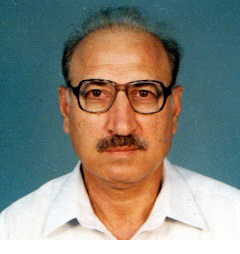
The writer is a freelance journalist, has served in the Pakistan government for 39 years and holds degrees in economics, business administration, and law. He can be reached at [email protected]
View all articles →2 Comments
No comments yet. Be the first to join the discussion!


