

June 9, 2026
Refusal cases in polio drives show continued decline
Refusal cases and missed children in Khyber Pakhtunkhwa’s polio campaigns are continuing to decline, especially in high-risk districts. Health experts say mandatory vaccination legislation is needed to achieve full coverage and eradicate the disease.

June 9, 2026
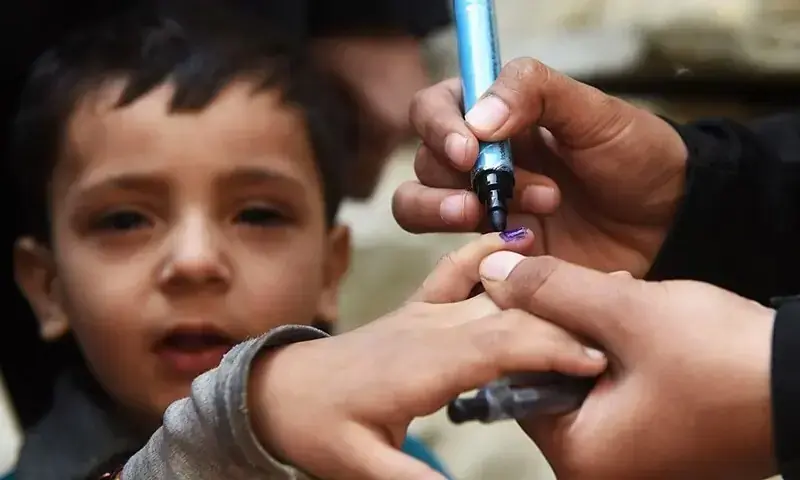
PESHAWAR: Refusal cases and the number of missed children during door-to-door polio vaccination campaigns have continued to fall in Khyber Pakhtunkhwa, particularly in high-risk districts, but health experts say legislation is needed to make immunisation compulsory for all eligible children.
Experts said the Khyber Pakhtunkhwa government should introduce a law to ensure every child is vaccinated. They pointed to the Polio Eradication and Rehabilitation Bill, 2026, passed by the National Assembly on May 13, which is aimed at addressing persistent vaccine hesitancy in Islamabad Capital Territory. Under that bill, polio vaccination would become mandatory for every eligible child, and no parent or guardian would be allowed to deliberately refuse or obstruct immunisation except on the basis of a valid medical contraindication certificate.
The bill, once enacted, provides for fines ranging from Rs50,000 to Rs100,000 for repeat offences by those refusing anti-polio drops. It also allows courts to impose imprisonment on people who obstruct vaccine administration. The proposed law further bars students from university admissions and citizens from obtaining passports without proof of immunisation.
Health experts said polio eradication, which the government is pursuing with the support of UN agencies, should be backed by mandatory legal provisions and strict penalties for people who remain hesitant about vaccination. They noted that vaccinators and the police assigned to protect them continue to face attacks from opponents of the campaign, even though teams have managed to immunise more than 95 per cent of children in each round.
During the four-day campaign held in May in 23 high-risk districts of Khyber Pakhtunkhwa, health workers reached 97 per cent of the 4.6 million children targeted. Even so, 94,459 children were left unvaccinated. Of them, 74,864 were absent when teams visited their homes, while parents of 19,805 children refused to let them receive the vaccine.
In Bajaur tribal district during the same campaign, two policemen deployed with polio teams were martyred in firing by unidentified attackers. More than 110 police personnel and health workers have been killed or injured since 2012.
A paediatrician said the province must vaccinate every child up to the age of five and remain free of polio cases for three consecutive years to be declared polio-free. “We have to immunise every child till five years and ensure that the province stay clear of polio case for three years in a row. It will serve the purpose to declare the province polio-free. Otherwise, the vicious cycle would continue even if we reach 95 per cent children,” said the paediatrician.
A senior paediatrician said the government has several options to enforce vaccination, especially against polio, which has damaged Pakistan’s standing internationally, with even older travellers being required to show polio certificates for foreign travel and for proceeding to perform Haj. He also said senior doctors have been targeted during polio campaigns.
Pakistan has recorded three polio cases so far this year, including one in Sindh and two in Khyber Pakhtunkhwa, with one case each reported from North Waziristan and Bannu. These children had not been immunised and lacked immunity. Last year, the country recorded 31 cases in total, of which 20 were from Khyber Pakhtunkhwa. Most of those were from southern districts, including five in North Waziristan, four each in Tank and Lakki Marwat, three in Bannu, two in Torghar and one in Dera Ismail Khan.
The Emergency Operation Centre, which is leading the anti-polio campaign, is making extensive preparations with a special focus on security, but experts said reaching 100 per cent of children remains difficult because some families continue to refuse vaccination.
0 Comments
No comments yet. Be the first to join the discussion!


