

June 9, 2026
Govt considers easing remittance cap to help overseas Pakistanis transfer assets
The government is considering easing the remittance cap in the upcoming budget as overseas Pakistanis face hurdles in transferring liquid assets to Pakistan. Financial industry sources say the current Rs5 million limit is obstructing repatriation of funds.

June 9, 2026
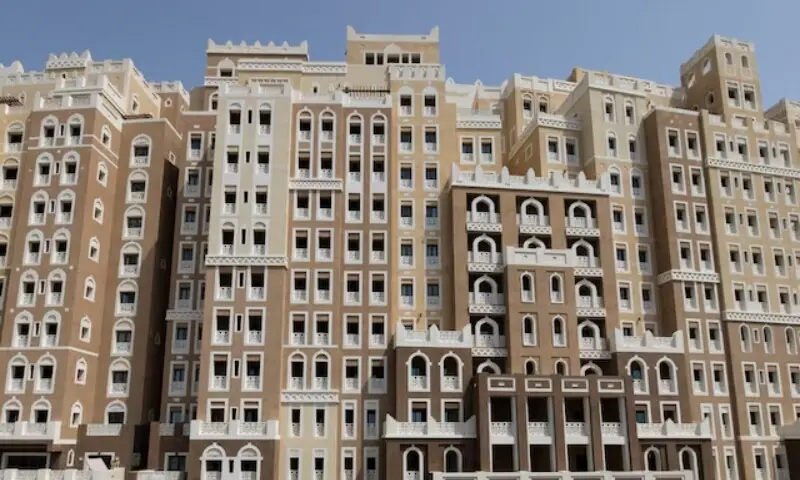
KARACHI: The government is considering relaxing the remittance ceiling in the upcoming budget as Pakistanis living abroad face difficulties in moving investments and liquid assets back home, according to people in the financial industry.
Under the current framework, remittances above Rs5 million face restrictions when the sender and recipient are not blood relatives. The threshold had earlier been Rs10 million before being cut to Rs5 million. Financial industry sources said the present limit has become a hurdle for overseas Pakistanis seeking to repatriate funds.
Worsening conditions in parts of the Gulf have led many Pakistanis to think about bringing their money back to Pakistan. While disposing of property overseas remains difficult, liquid assets can still be transferred, though the cap on amounts above Rs5 million is seen as a major impediment.
Concerns over assets in Dubai
Pakistanis have regularly ranked among the top foreign buyers of real estate in Dubai, at times second only to Indians. In recent years, thousands of Pakistani technology companies have also shifted to Dubai, drawn by business prospects and a more favourable tax environment.
A financial expert with close links to Dubai said the uncertainty surrounding the emirate had deepened as the conflict that began on Feb 28 entered its fourth month. “The war-like situation has entered its fourth month and there is still no clarity about Dubai’s future, even though it remained a prime target during the conflict that began on Feb 28,” said a financial expert with close links to the emirate," he said.
The same expert said working-class Pakistanis were largely still living in Dubai, but wealthier individuals with sizeable investments and property were increasingly trying to shift funds elsewhere because of worries about the safety of their assets.
Although no official figures are available on Pakistanis expelled from Dubai, sources said they had seen multiple such cases. They added that many affluent Pakistanis were trying to sell their real estate and move liquid funds out of the emirate. Market observers, meanwhile, said property prices in Dubai had fallen sharply and buyers had become harder to find.
Challenges in other countries
Sources also said Pakistanis in other countries were facing pressure. They said thousands were having difficulty settling in places including South Africa, some US states and other countries where immigrants were coming under increasing strain, leading some to consider returning to their home countries.
One source said lifting the transfer cap could assist Pakistanis in several parts of the world while also helping Pakistan by increasing remittance inflows. “The removal of the remittance cap would benefit Pakistanis in several countries and could also support Pakistan’s economy by boosting remittance inflows,” a source said.
Trade data with Abu Dhabi and Dubai
State Bank data showed that trade with Abu Dhabi and Dubai rose despite tensions in the region. During July-April FY26, imports from Abu Dhabi climbed to $1.193 billion, up from $862 million in the same period of the previous fiscal year. Imports from Dubai increased to $5.592 billion from $5.254 billion.
In March, when the Gulf conflict was at its peak, imports from Abu Dhabi dropped to $50.5 million before recovering to $121 million in April. Imports from Dubai also fell to $437 million in March and then rebounded to $862 million in April.
On the export side, shipments to Dubai slipped slightly to $1.554 billion in the first 10 months of FY26, compared with $1.578 billion a year earlier. Exports to Abu Dhabi, however, rose to $179 million from $78 million over the same period.
0 Comments
No comments yet. Be the first to join the discussion!


