

June 9, 2026
FIA sets up FATF desks nationwide ahead of next evaluation
The FIA has expanded its FATF secretariat by setting up desks across all wings and zones ahead of Pakistan’s next evaluation in 2027. Officials said the move is aimed at improving investigations, coordination and compliance with anti-money laundering standards.

June 9, 2026
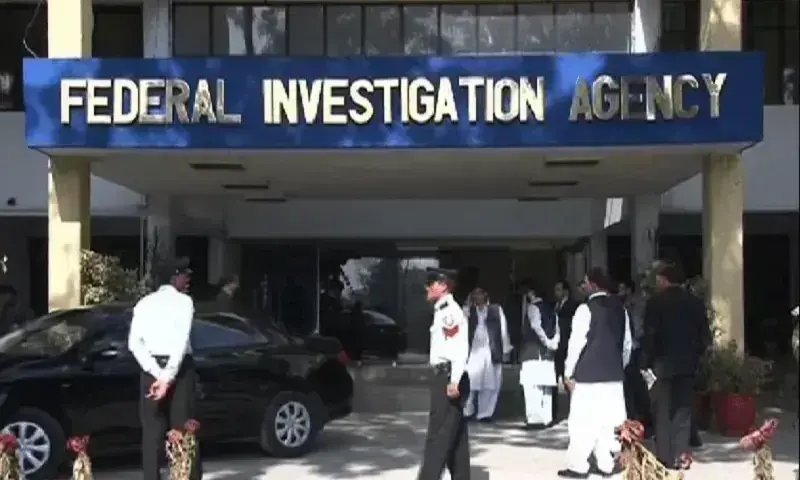
LAHORE: The Federal Investigation Agency has established Financial Action Task Force desks across all of its wings and zones by expanding the existing FATF secretariat at its Anti-Money Laundering Directorate, in preparation for Pakistan’s next assessment by the global anti-money laundering watchdog, expected in the last quarter of 2027.
A senior FIA official said the step is aimed at strengthening implementation of international standards in investigations related to money laundering, terrorism financing and predicate offences. The official said FIA Director General Dr Usman Anwar had instructed all zones and specialised wings to create FATF desks within seven days, and ordered that each desk be led by an officer of at least assistant director rank.
The official said the expanded structure is intended to improve investigations and prosecutions, record-keeping, the timely preparation of international cooperation requests, coordination among agencies and feedback systems.
“This significant step will also improve the quality of investigations and prosecutions, data maintenance, timely generation of international cooperation requests, prompt inter-agency coordination and effective feedback mechanisms,” a senior FIA official told Dawn on Tuesday.
Expanded structure and units
According to the official, the FATF secretariat was first established at FIA headquarters in 2021 within the Anti-Money Laundering Directorate to help address shortcomings identified in the 27-point action plan and ensure effective application of FATF standards. He said the increase in case volumes and changing patterns in investigations involving predicate offences, anti-money laundering and countering financing of terrorism made an expansion of the framework necessary.
The newly created desks comprise seven units: the Financial Intelligence Unit, Investigation Monitoring Unit, International Cooperation Unit, Inter-Agency Coordination Unit, Risk Assessment Unit, Seizure and Confiscation Unit, and Forensics and Virtual Assets Unit. Each zonal desk will report to the corresponding desk in the relevant wing at FIA headquarters.
The Financial Intelligence Unit receives financial intelligence from the FMU, passes it on to relevant zones for investigation and sends feedback back to the FMU. The International Cooperation Unit handles outgoing and incoming requests for help from foreign jurisdictions, through formal and informal channels, in cases involving money laundering, terrorism financing and predicate offences. This assistance includes evidence gathering, seizure and confiscation of foreign proceeds, and the arrest of absconding suspects.
The Investigation Monitoring Unit oversees the effectiveness and quality of ongoing cases by guiding investigators and prosecutors. The Inter-Agency Coordination Unit is tasked with ensuring investigators receive information and evidence from other law enforcement bodies, regulators and authorities, including Nadra, the Directorate General of Immigration and Passports, excise departments, the Pakistan Telecommunication Authority and the Federal Board of Revenue’s income tax wing.
The Risk Assessment Unit will carry out periodic assessments of sectors, geographic areas and offences within its scope, with the results feeding into Pakistan’s National Risk Assessment, the official said. The Seizure and Confiscation Unit will oversee seizure and confiscation in money laundering and terrorism financing inquiries and maintain a database of such actions taken by the FIA.
The Forensics and Virtual Assets Unit has been created to address investigative needs linked to digital devices, the use of cyberspace in conventional crimes, and virtual assets used for moving illicit proceeds or for placement, layering and integration. The official said each zone would also maintain an official digital wallet for the secure custody of seized and confiscated virtual assets.
“Each zone will also maintain an official digital wallet for the safe custody of seizure and confiscation of virtual assets,” the official said.
Background and continued compliance efforts
Pakistan was placed on FATF’s enhanced monitoring, or grey, list in August 2018 and was removed from it in October 2022 after showing substantial progress on a 27-point action plan covering technical compliance and effectiveness. According to the official, the country’s removal from the grey list improved its standing with international financial watchdogs and investor confidence, and also supported wider economic engagement, including talks with the International Monetary Fund.
“Domestically, it also improved the effectiveness of regulations, law enforcement and capacity of regulators and law enforcement agencies (LEAs) in CFT and money laundering,” the official said.
The official added that, since Pakistan’s exit from the grey list, institutions including the FIA, National Accountability Bureau, Anti-Narcotics Force, Counter Terrorism Departments, National Cyber Crimes Investigation Agency, FBR Customs and FBR Inland Revenue, as well as financial sector regulators and designated non-financial businesses and professions, had continued work to maintain compliance with FATF standards.
He said authorities had kept up action against cross-border cash smuggling, improved Know Your Customer and Customer Due Diligence requirements for financial transactions, and strengthened oversight of designated non-financial businesses and professions such as real estate agents, dealers in precious metals and stones, accountants and lawyers.
Another official said that during the grey-list period, Pakistan also made notable progress in countering terrorism financing by acting against proscribed individuals, organisations and associated networks, seizing properties, freezing bank accounts and prosecuting those involved in terror-financing cases.
“The National Counter-Terrorism Authority (Nacta), CTDs, the FIA, provincial home departments, district intelligence committees, police, intelligence agencies and other authorities played a pivotal role through synergised efforts in removing major shortcomings and developing a sustainable and effective countering and monitoring regime for the financing of terrorism,” another official said.
He said the establishment of more FATF desks and specialised units showed the FIA’s continuing effort to preserve compliance before the next mutual evaluation and to prevent any renewed scrutiny by the watchdog.
0 Comments
No comments yet. Be the first to join the discussion!


